Every B2B brand has a story worth telling. The challenge is telling it in a way that resonates with business buyers, not just entertains. This guide features 15 B2B brand storytelling examples from companies like Salesforce, Slack, Notion, and more. Each example breaks down a specific campaign or initiative and explains what makes it effective, so you can apply the same principles to your own brand.
What Makes B2B Brand Storytelling Actually Work?
Most brand storytelling roundups recycle the same consumer examples: Nike, Apple, Patagonia. Those companies tell great stories, but their playbooks rarely translate to B2B. You probably don’t have a Super Bowl budget or a product people tattoo on their bodies.
B2B storytelling operates under different constraints and different rewards. 62% of B2B marketers report that storytelling is effective in their content marketing, and 92% of consumers say they want brands to make content that feels like a story. The disconnect is that B2B companies tend to default to feature lists, jargon, and case studies formatted like tax documents.
The examples below prove that you don’t need a consumer product to tell a compelling brand story. You need three things: authenticity (a point of view that’s actually yours), specificity (real details, not marketing abstractions), and repetition (the same story told through every touchpoint, not one campaign and done).
Your brand is the sum of what people believe about you. You shape that belief through the most powerful form of human communication: story. Content is the practice of storytelling, in many different forms. Here are 15 B2B companies doing that well.
15 B2B Brand Storytelling Examples
1. LinkedIn: “No One Knows What You Do”
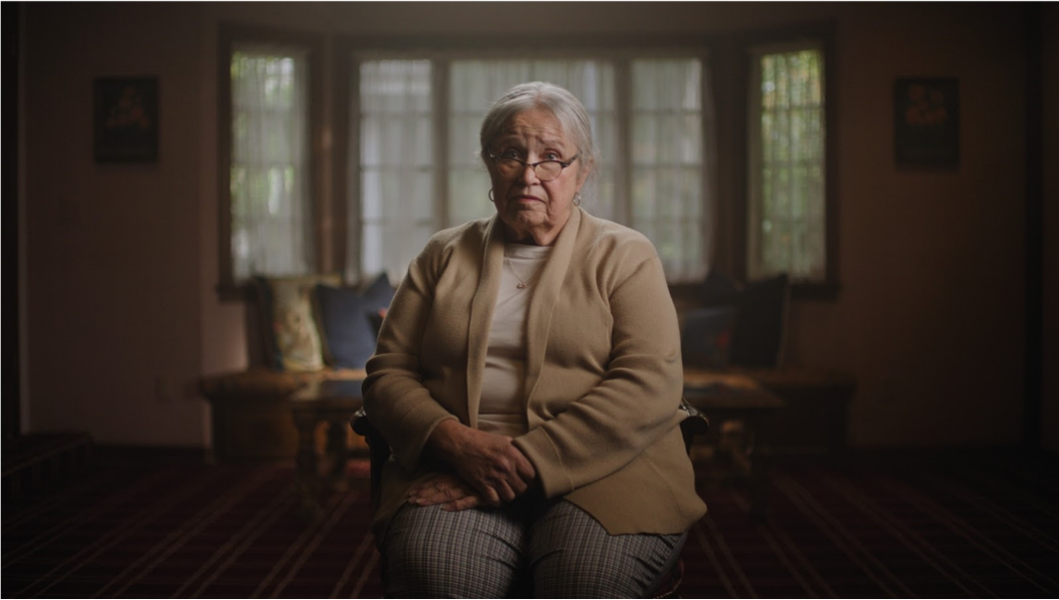
Produced by Ryan Reynolds’ agency Maximum Effort, LinkedIn’s 2023 campaign pokes fun at a universal B2B truth: your parents have no idea what you do for a living. The spots follow confused family members trying to make sense of job titles like “cloud salesman” and marketing acronyms. The campaign ran across 18 markets on CTV, social, and LinkedIn’s own channels.
Why it works: LinkedIn took the most relatable frustration in B2B (nobody outside our industry understands our jobs) and turned it into entertainment. The humor builds affinity with exactly the audience LinkedIn needs to keep engaged: working professionals who feel seen.
2. Notion: “Notion Faces” Creator Campaign
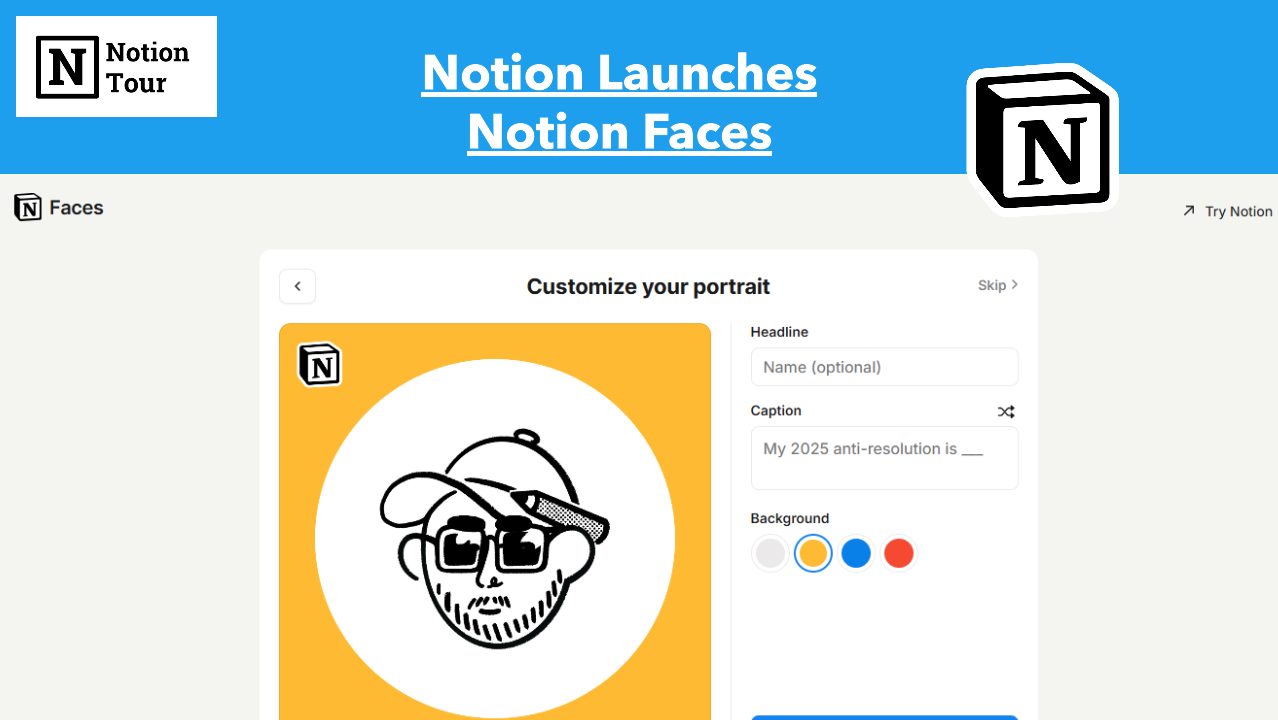
In January 2025, Notion launched a feature letting users create custom hand-drawn self-portraits. To promote it, they activated 60+ creators simultaneously on LinkedIn, with Snoop Dogg as their first celebrity collaborator. Creators posted their Notion Faces, shared tips, turned avatars into memes, and some went live across YouTube, Instagram, and TikTok at the same time.
Why it works: Notion made a product feature launch feel like a cultural moment. By putting creators (not the product) at the center, they generated authentic engagement at a scale no brand-owned channel could match. B2C energy, B2B platform.
3. Mailchimp: “Turn Clustomers into Customers”
Mailchimp’s 2023 global campaign invented a word: “clustomers,” visualized as a giant ball of tangled-up people representing an undifferentiated customer base. In the spots, each person receives a personalized email that separates them from the mass, turning them into an individual. Created by Wink Creative and directed by Calmatic, the campaign ran across digital, OOH, and social.
Why it works: Mailchimp turned an abstract concept (personalization at scale) into something physical and instantly understandable. Similar in approach to HackerOne’s “Cyberstrength” campaign, the invented word gave the campaign a hook that’s impossible to forget, and the visual metaphor makes Mailchimp’s value proposition obvious without a single feature slide.
4. Monday.com: Singing Llamas
Monday.com’s 2025 campaign opens on a familiar scene: employees dreading yet another software rollout. Then CGI llamas appear, singing a cover of Rihanna’s “We Found Love” as the office discovers they actually enjoy using the platform. Directed by Rob Leggatt and produced entirely by Monday.com’s in-house creative team, the spot aired on CTV, audio, and performance channels across North America, with OOH takeovers in NYC subways, Chicago transit, and Atlanta’s airport.
Why it works: The campaign was inspired by actual customer feedback about falling in love with the platform. By grounding absurdist humor in a genuine insight, Monday.com made a work management tool feel emotionally compelling.
5. Salesforce: McConaughey and Agentforce
Salesforce committed to celebrity storytelling at scale by signing Matthew McConaughey as creative adviser for $10M+ annually. The partnership launched with two 2025 Super Bowl spots featuring McConaughey and Woody Harrelson in comedic scenarios (a gate change disaster, a restaurant nightmare) caused by companies that lack AI agents. The tagline: “What AI Was Meant to Be.”
Why it works: Salesforce used A-list talent to make enterprise AI feel accessible and even funny. The spots don’t explain what Agentforce does technically; they show what goes wrong without it. Crucially, the spots speak to fears and pain points of enterprise customers, painting AI as a “wild west” environment where Salesforce could be the partner to help companies get things under control.
6. Hummingbird: Making Financial Compliance Sexy
Hummingbird builds software that fights financial crime. Not exactly a category that screams “watch this video.” But Column Five created an explainer video that uses a mixed-media mosaic of illustration, photography, and animation to make compliance technology feel urgent and cinematic. The human-centric narrative focused on the crime-fighting mission, not the software features, while the visual style drew directly from Hummingbird’s existing brand identity.
Why it works: The video reframed a dry B2B category as a human drama. Sales teams got a tool that communicates the product in 90 seconds, and the custom visual assets expanded Hummingbird’s brand identity for ongoing content creation.
7. Teamwork.com: “The Client”
Teamwork.com’s 2024 campaign is a fake horror movie trailer where “The Client” is the villain: changing scope at 4:59 PM, requesting “quick” revisions that take weeks, and delivering feedback in voice memos. Created by B2B video agency Umault, the first trailer generated so much buzz that Teamwork produced a sequel (“The Client: Part Deux”) and a third installment. The series racked up 2.3 million views and 7.5 million impressions across YouTube and LinkedIn within eight weeks.
Why it works: Teamwork found the single most relatable pain point for their target audience (agency professionals) and dramatized it with genuine production value. The horror genre is unexpected for B2B SaaS, which is exactly why it earned attention and shares.
8. Dialpad: Putting the LOLs into A.I.
When Dialpad launched their VoiceAI product, Column Five created two comedic videos spoofing the daily frustrations of business calls: missed notes, awkward silences, and the chaos of conference calls. The approach centered on Dialpad’s refreshed brand strategy and the tagline “Make Smarter Calls.” Both videos earned 300,000+ views and back-to-back Webby Award honoree nods in “Branded Entertainment Scripted” (2019 and 2020).
Why it works: Dialpad could have made a product demo. Instead, they made content people voluntarily watched and shared. The humor demonstrated the product’s value by dramatizing the problem it solves, and the established brand messaging framework continues to guide Dialpad’s content across formats.
9. GitHub: “What is GitHub?”
GitHub hired comedian Phil Wang and a rubber duck to explain what GitHub actually does. The brand film by BUCK travels through four chapters using live-action, 2D, 3D, and cel animation to cover how GitHub works, celebrate standout projects, and articulate the platform’s cultural significance. The rubber duck is a nod to “rubber duck debugging,” a developer practice of explaining code out loud to find bugs.
Why it works: GitHub needed to explain a deeply technical product to a broader audience without alienating their core developer community. Phil Wang’s “geeky powerhouse” persona threaded that needle, and the mixed-media approach kept each chapter visually distinct. The film was selected for SIGGRAPH 2023’s Electronic Theater.
10. Fiverr: “Nobody Cares: The Musical”
Fiverr’s October 2024 campaign is a full Broadway-style musical number with a simple message: nobody cares if you use AI. They care about results. The spot features jazz hands, cameos from Corporate Bro and Fiverr CEO Micha Kaufman, and a sing-along tune that’s deliberately catchy. Alongside the campaign, Fiverr released data showing 63% of freelancers now use generative AI (up 5% from 2023).
Why it works: At a moment when every tech company was breathlessly hyping AI capabilities, Fiverr cut through the noise by saying what their audience was thinking: the tool matters less than the talent using it. The musical format made the contrarian message impossible to ignore.
11. Squarespace: “Make the Next”
Squarespace’s “Make the Next” campaign follows individual creators as they turn passions into empires with the help of the platform. Each spot traces a single founder’s journey from idea to scaled business, using cinematic production values that feel more like short films than software ads. The campaign reinforces Squarespace’s positioning as a builder’s tool, not just a website maker.
Why it works: By following one creator per spot (instead of a montage), Squarespace gives each story room to breathe. The specificity makes the narrative believable, and the production quality signals that Squarespace takes its users’ ambitions as seriously as they do.
12. Palo Alto Networks: “This is Precision AI”
Palo Alto Networks cast Keanu Reeves in a series of sci-fi action spots directed by David Leitch (of John Wick and Deadpool 2 fame), with a score by composer Daniel Pemberton. In “Origin,” Reeves’ character drops into a virtual armory, upgrades his gear, and prepares to battle AI-powered cyber threats. The campaign saw a 45% increase in website engagement and 7.1 million video views in its first month.
Why it works: Cybersecurity is abstract and anxiety-inducing. By borrowing from the action genre (and casting an actor synonymous with it), Palo Alto Networks made threat prevention feel empowering rather than scary. The production quality put them in a different league from every other enterprise security vendor.
13. UKG: “When Work Works, Everything Works”
HR software company UKG launched a full rebrand in late 2025 with Adam Scott (of Severance fame) voicing “Work” itself as a self-aware, evolving character. Created by Droga5 (Accenture Song), the campaign includes an 80-second film, a 60-second anthem, and a series of shorter cuts running across CTV, digital, social, print, OOH in major airports, and events.
Why it works: Casting the star of Severance (a show literally about the relationship between people and work) to voice the concept of “work” is a layered creative choice that rewards the audience for paying attention. The campaign positions UKG’s platform rebrand inside a cultural conversation that’s already happening.
14. SurveyMonkey: “Same Changer”
SurveyMonkey’s “Same Changer” campaign reframes the survey tool as something more fundamental: a way to validate decisions, understand customers, and reduce guesswork across an entire organization. The creative positions SurveyMonkey as the instrument behind better choices, whether you’re a product team testing a concept or a marketing team measuring sentiment.
Why it works: “Same Changer” redefines what the product means to buyers. Instead of competing on survey features, SurveyMonkey tells a story about the impact of asking better questions. The campaign elevates a commodity tool into a strategic asset.
15. Pluralsight: “Tap In”
Pluralsight’s 2025 campaign, created by agency Moroch, centers on the insight that people already have the mental hardware; they just need the software. The anthemic spots feature imaginative representations of empowerment (rockets launching, people running through walls) as an invitation for tech professionals to recognize the intelligence they already possess and connect it to the skills that will shape tomorrow. The campaign runs across an international omni-channel strategy spanning North America, the UK, Canada, Germany, and India.
Why it works: Most education platforms lead with course catalogs or skill gap anxiety. Pluralsight flipped the script by starting with what the learner already has and positioning the platform as an accelerant, not a remediation tool. The empowerment framing makes the brand aspirational rather than prescriptive.
What B2B Brands Can Learn from These Examples
A pattern runs through all 15 of these companies. None of them lead with product specs. None of them sound like their competitors. And none of them treat storytelling as a campaign that runs for a quarter and then stops.
The best B2B brand stories share three characteristics:
The customer (or user) is the hero. Salesforce, Squarespace, Teamwork, and Slack all make their customers the protagonists. The brand exists to empower the hero’s journey, not to headline it.
Specificity beats aspiration. GitHub’s rubber duck, Monday.com’s CGI llamas, and Fiverr’s Broadway musical work because they commit to a specific creative idea instead of trying to appeal to everyone. Too many B2B brands default to generic messaging because it feels safe. These examples prove that specificity is what makes stories memorable.
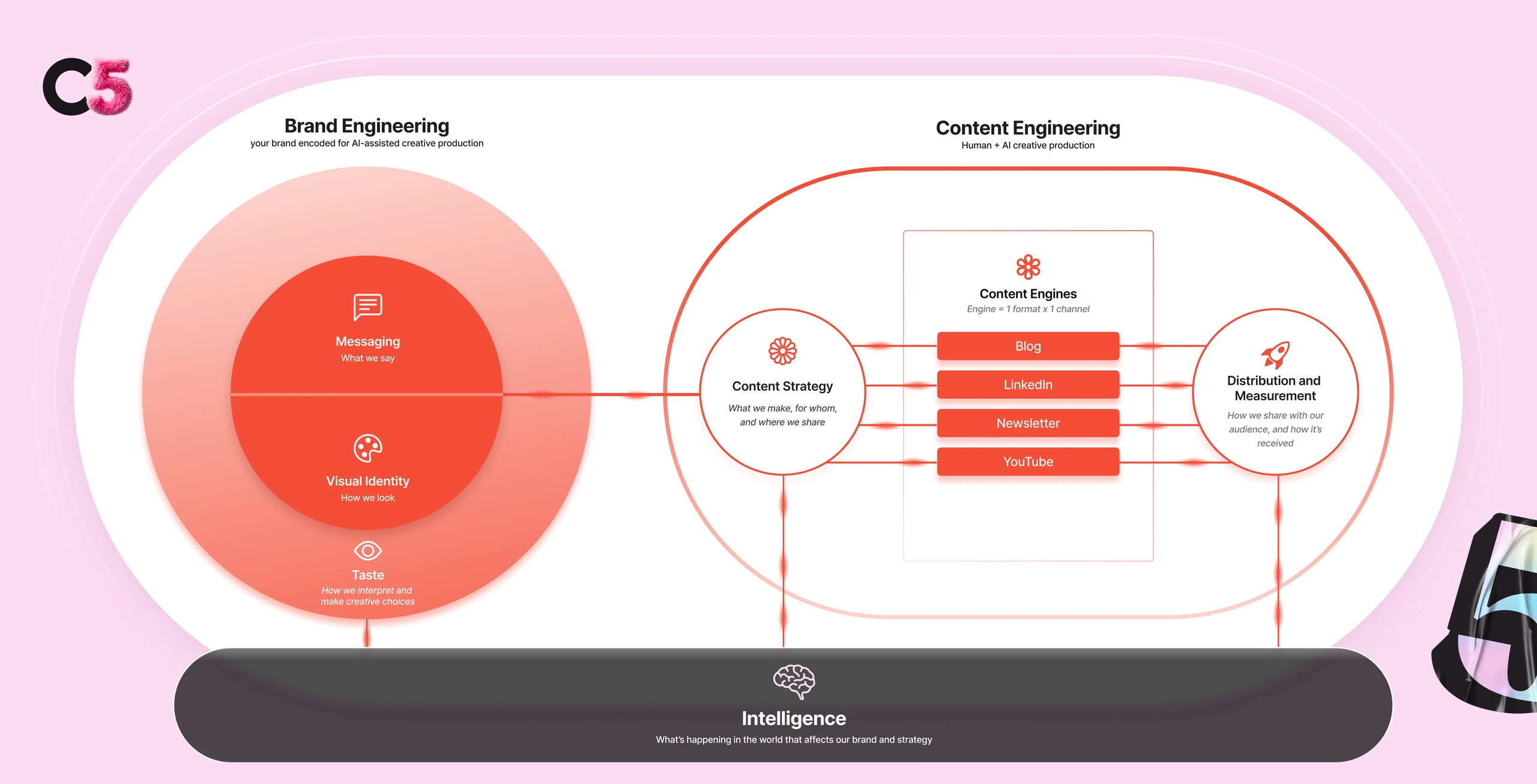
The story is a system, not a moment. Notion’s community content engine, Mailchimp’s brand voice guide, and LinkedIn’s recurring B2B campaigns are storytelling systems that operate continuously across every touchpoint. One great campaign doesn’t build a brand. Consistent storytelling does.
That last point matters more in 2026 than ever. With 84% of B2B buyers now using AI for discovery, your brand story needs to be consistent, structured, and findable by machines as well as humans. A brand story that only lives in a launch video or an About page won’t surface in AI-synthesized recommendations. A story system that runs through every piece of content will.
How to Start Telling Your Brand Story
You don’t need Keanu Reeves or a Broadway number. You need a point of view and the discipline to express it consistently. Here are three starting points:
Find your brand story. Before you create content, articulate why your company exists beyond making money. What do you believe about your market that your competitors don’t? That belief becomes the foundation of every story you tell. We call this your brand story: the intersection of purpose, vision, mission, and values.
Pick one story to tell well. Don’t launch a 12-part series. Start with one customer story, one founder insight, or one data point that captures your brand’s essence. Tell it in a blog post, then adapt it for social, then reference it in sales conversations. Our step-by-step guide to telling your brand story walks through the full process.
Build your storytelling toolkit. Document your voice, your messaging pillars, and your proof points so that everyone on your team (and any agency partners) can tell the same story consistently. For more on this, see our 25 brand storytelling tips.
FAQ
What is brand storytelling?
Brand storytelling is the practice of using narrative to communicate what your brand stands for, what it believes, and why it matters to the people it serves. It goes beyond product features and company history to create an emotional and intellectual connection with your audience through content.
What makes a good B2B brand storytelling example?
The best B2B storytelling examples share three traits: the customer is the hero (not the product), the creative commits to a specific angle rather than trying to appeal to everyone, and the story extends beyond a single campaign into a repeatable system. Production quality helps, but a clear point of view matters more.
How is B2B brand storytelling different from B2C?
B2B buying involves multiple stakeholders, longer sales cycles, and higher stakes. B2B brand stories need to build trust and demonstrate expertise over time rather than triggering an impulse purchase. The most effective B2B storytelling positions the customer as the hero and the brand as the guide, using specificity and evidence rather than aspiration and lifestyle imagery.
How do you measure the impact of brand storytelling?
Track brand search volume, direct traffic, engagement metrics (time on page, scroll depth), and share of voice in your category. For B2B specifically, monitor whether storytelling content influences deal velocity and pipeline. The most important signal is whether your sales team references your content in conversations, because that means the story is resonating at the point of decision. See our guide to content marketing ROI for a deeper framework.



Let's upgrade your marketing game
Get fresh tips, how-tos, and expert marketing advice every week. (15,000 people already are.)