

Creating a strong brand requires much more than a catchy logo, a cool palette, or even a fantastic product. While those elements are necessary, they’re just surface-level stuff. If you want real longevity—the kind that survives market downturns and fierce competition—you need to build strong relationships with people. And we’re talking about everyone: potential employees, new customers, partners, and advocates.
Building these relationships requires something deeper than a sales pitch. People want to understand not just what you sell but who you are. More specifically, they want to know your brand heart, which is comprised of your:
- Purpose: Why do you exist?
- Vision: What future do you want to help create?
- Mission: How do you create that future?
- Values: Who are you? How do you work?
These elements are the key to attracting the right people to your brand. The more you talk about them, the more people will feel connected to you. Unfortunately, many brands struggle with articulating who they are and what they care about.
Some bury a dry mission statement in a footer link where no one will find it. Others have an accessible About page that fails to give readers any sense of the brand’s history, personality, or passion. This is a massive missed opportunity that hurts both the brand and the audience.

The good news? You can take a cue from the many brands that do this exceptionally well. Whether it’s a simple blurb on a homepage or a multimedia journey through an About page, there are many brands that use content to showcase their values with clarity and creativity, helping them both stand out from the competition and connect with the right people.
If you’re looking for ways to share your beliefs in a natural and compelling way, these brand values examples will provide the inspiration you need.
1) Everlane
This clothing business aimed to disrupt the fast-fashion industry through something they call “radical transparency.” Their About page is a good example of that brand’s mission at work. First, they distill their core beliefs into simple, powerful language (using only 16 words), which is impressive for any brand.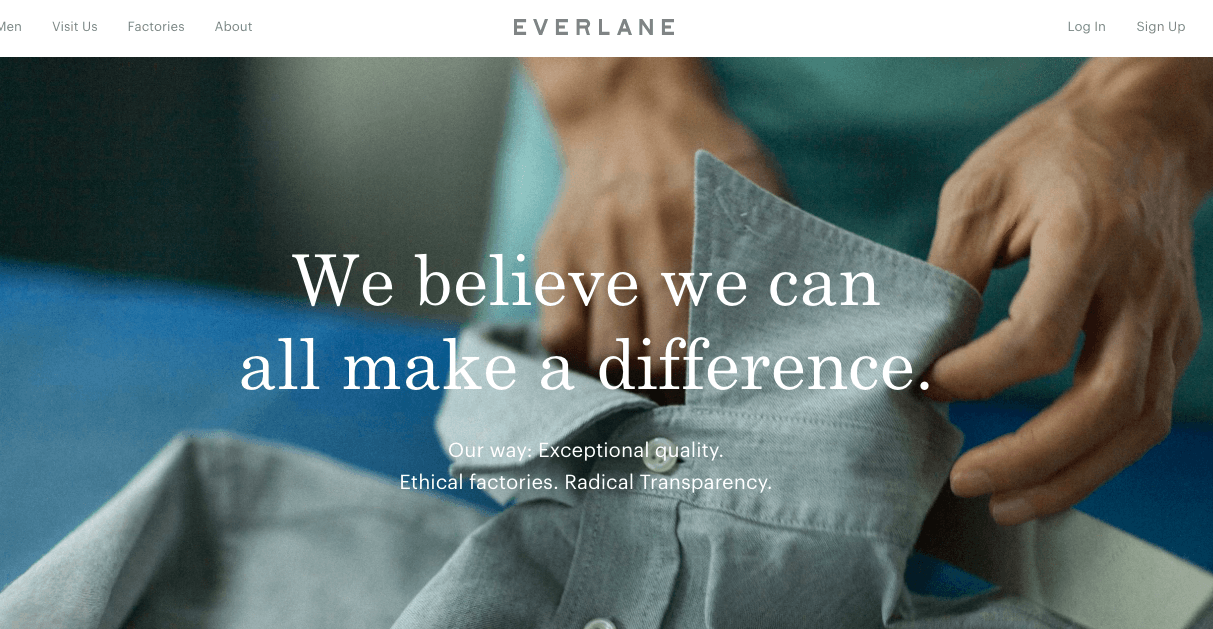
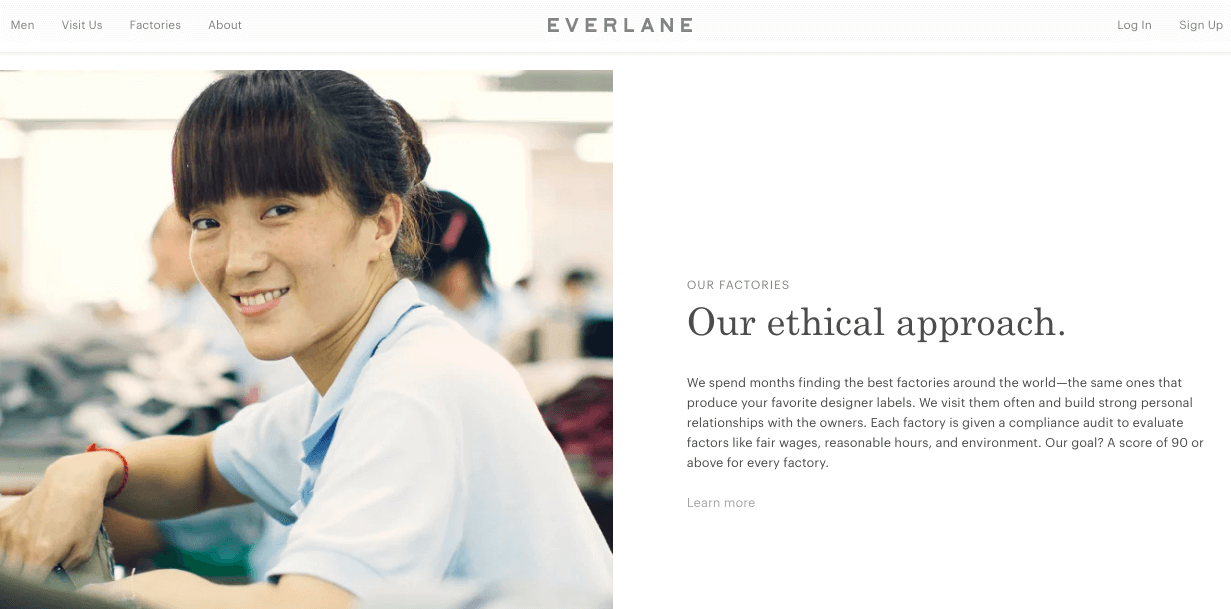
Next, they offer a deeper dive into each of their values, showing exactly how they apply their core beliefs to their manufacturing process. This is not just high-level talk. They put a literal face to the product and their manufacturing practices by showing the factories and the people who work there.
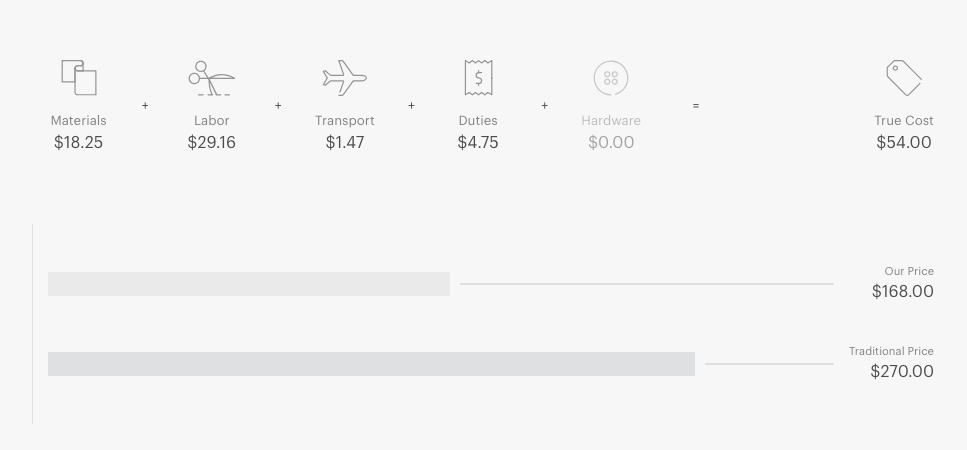
Best of all, they end the page with an infographic breakdown of their pricing model. This graphic shows how the company turns a profit while keeping prices reasonable. This reinforces their commitment to trust and transparency from start to finish, proving that Everlane walks the walk in every aspect of their business. It’s a great example of showcasing your values to build brand loyalty.
2) Hims
A good About page or brand values page is not necessarily about bells and whistles. Sometimes the simple, earnest approach makes the biggest impact. Take the Hims About page. This brand provides men with treatments for things like erectile dysfunction and hair loss, which are very sensitive issues for their target audience. As such, the brand shares its purpose through a simple letter from the founder.
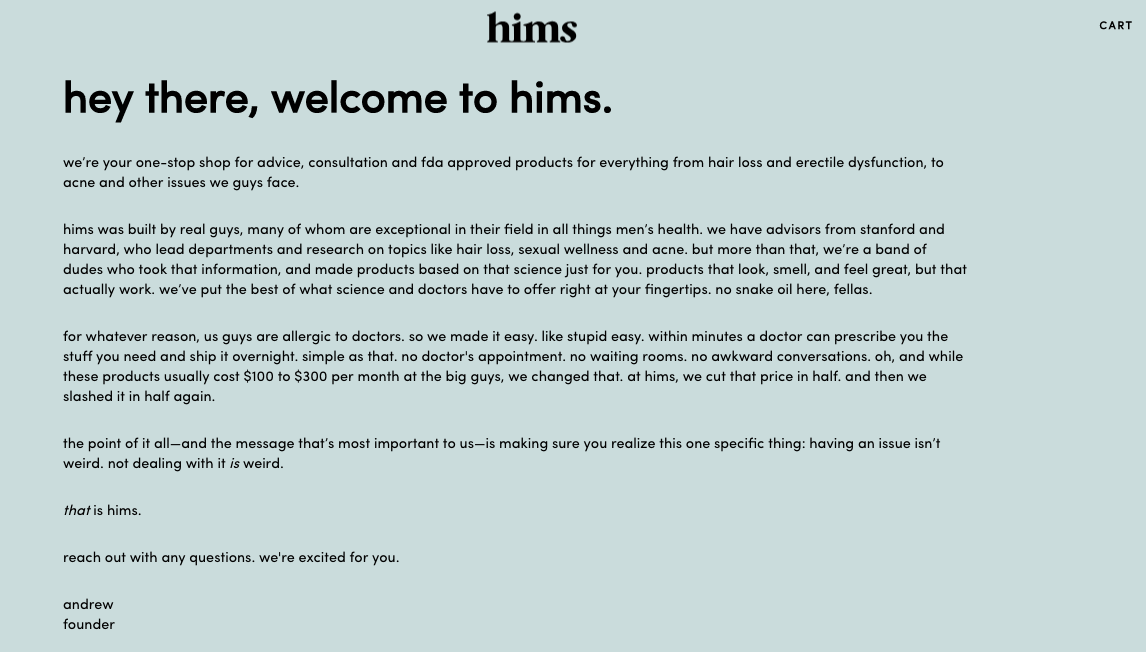
Written in plain English with empathetic language, this speaks directly to the man who comes across their site. They also take a straightforward approach, which mirrors the nature of their products. The page includes the casual founder’s photo—not a stuffy headshot—which is a nice touch that shows visitors the brand is run by real people who’ve also dealt with similar issues. This is a great way to communicate company values without being overly corporate.

3) Swell
Swell wastes no time in telling people who they are and what the brand stands for.
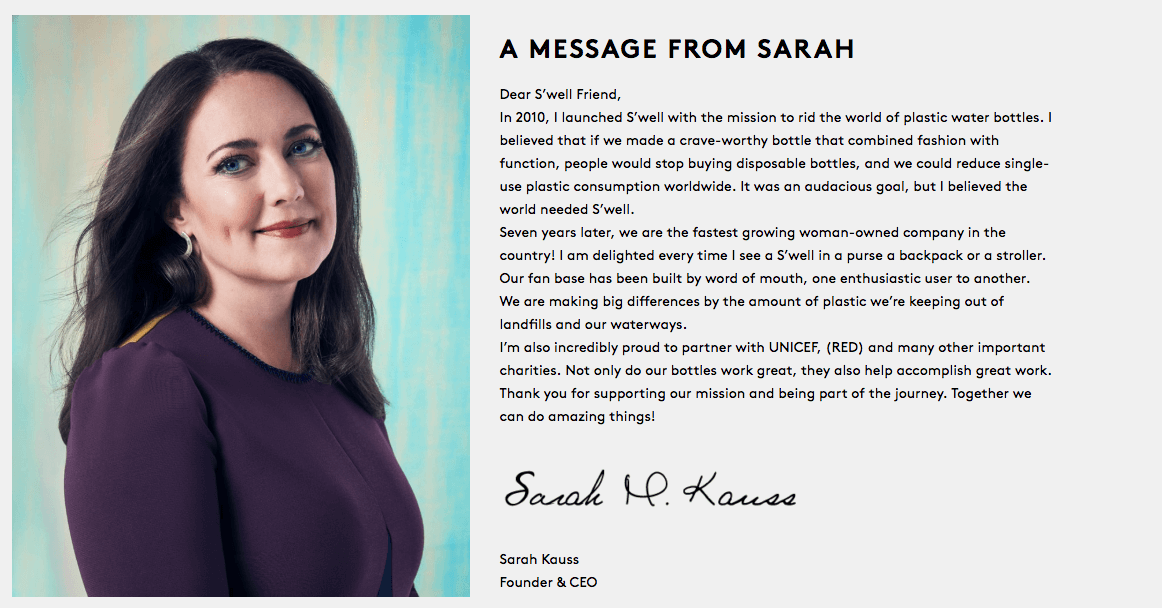 Through a letter from the founder, an informative video, and a visual guide to their products, they tell you everything about why Swell was created, from their mission (to rid the world of plastic water bottles) to their philosophy for product design.
Beyond being the fastest-growing female-owned company, you also see the important work they are doing with charities like UNICEF USA, BCRF, and (RED). It is the perfect snapshot of everything you want to know about the brand and its journey.
4) Kashi
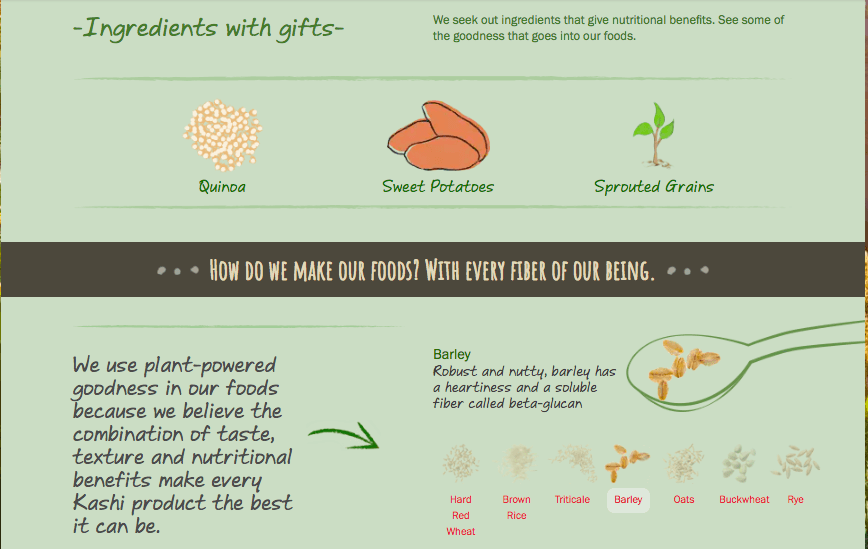
What does Kashi believe? They put their core values front and center with a visual and interactive About page, featuring a simple story told via parallax scroll. This is an engaging way to present brand storytelling—and a bit surprising for a cereal brand.

In addition to their brand values and mission, the brand adds extra interactive tidbits about their high-quality ingredients, as well as a timeline of products showcasing the brand’s evolution over the years. Little details like hand-drawn illustrations give you the sense that there are real humans behind the brand, helping to emphasize their mission of creating cereal with real ingredients. In general, this approach shows that core values matter.
5) Sonos
Sonos has embraced brand storytelling in an impressive way. Their About page is a beautiful scrolling story featuring people-heavy video, motion graphics, and more—accurately reflecting their hip, modern edge and target audience.
They are highly economical with their words, too. They tell the story through simple blurbs that cover everything from their mission to their ongoing innovation (including 500 patents and counting), which is a creative approach that really brings the brand to life. Most importantly, they leverage their unique brand values to distinguish themselves from competitors.
6) Virgin Media
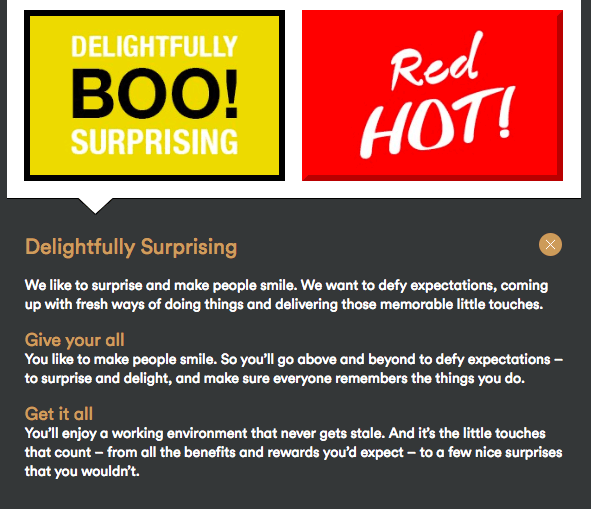
For huge corporations like Virgin, it is very easy to fall into the trap of boring and generic mission statements. However, Virgin is known for its bold and edgy branding. This is evidenced by the colorful depictions of their six values.

In classic Virgin style, their values are short, poppy phrases. They use terms like “Red Hot” and “Straight Up.” This builds just enough intrigue to make you want to click on each one. It also distinguishes their company culture from a standard corporate environment.
7) WeWork
WeWork’s mission statement is pretty damn irresistible: “Create a world where people work to make a life, not just a living.”
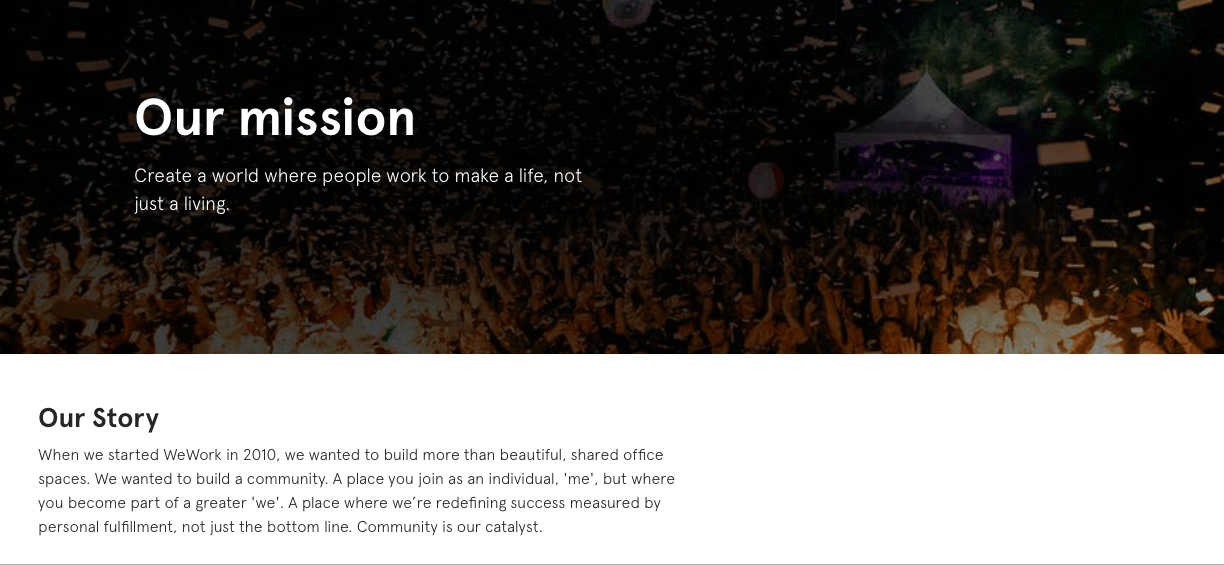
As such, the coworking space puts the spotlight on their people and brand values, focusing on the founders, the story, and the team. While the page is fairly simple, it is the transparency that matters most.
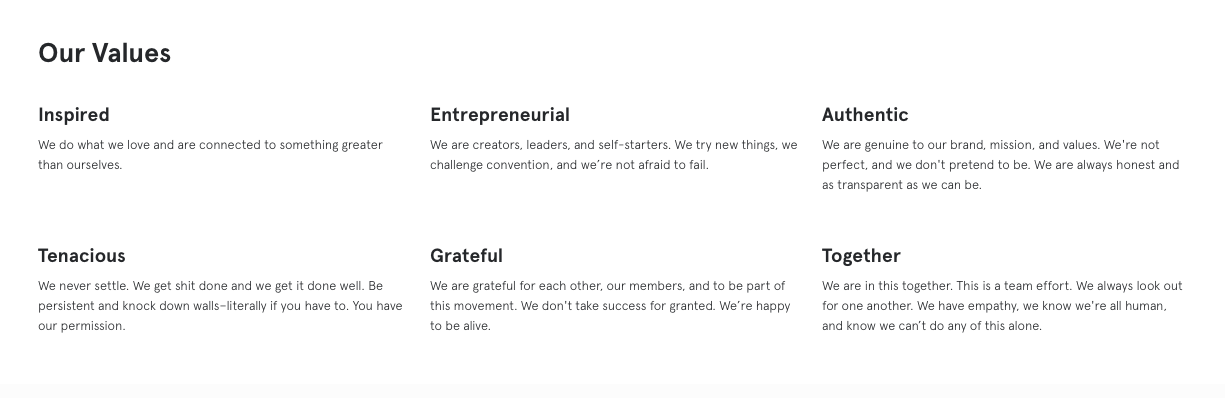
8) Zenefits
For the HR platform Zenefits, humans are always at the forefront of their business strategy. Hence, their About page features staff photos, company milestones, video, and values.

We are especially fond of their brand values, intentionally written in simple, direct language. Even their bright, bold brand colors bring a lively energy to the page. This type of page could easily be a dull corporate stock page, but they make it alive with a vibrant company culture.
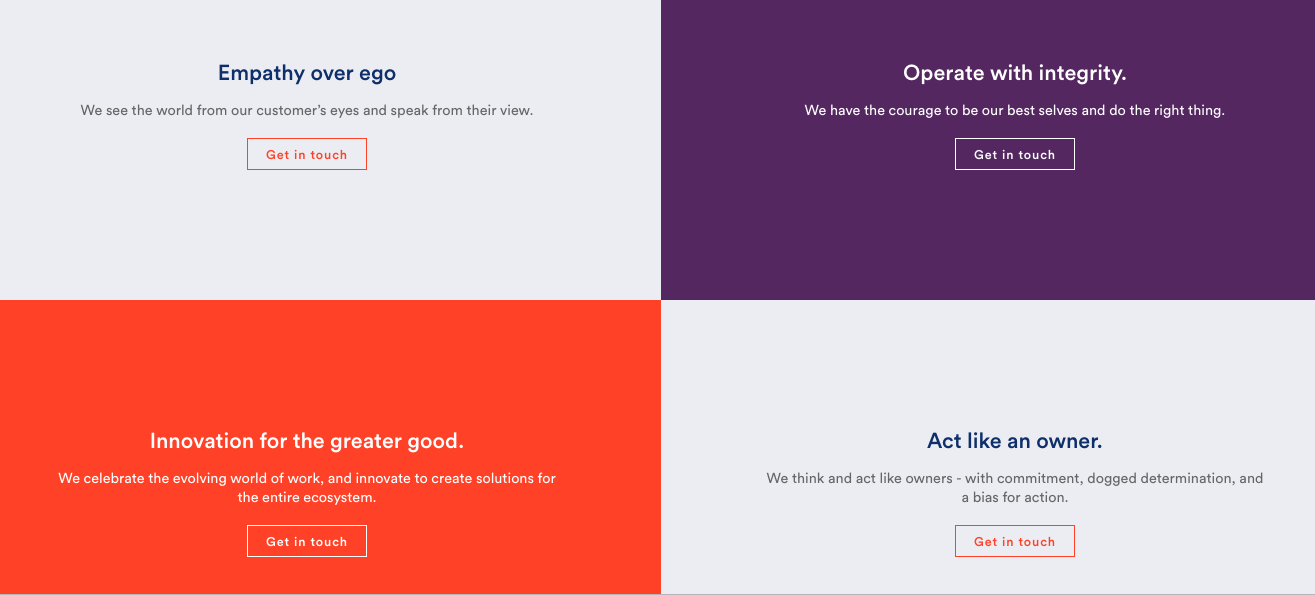
9) NerdWallet
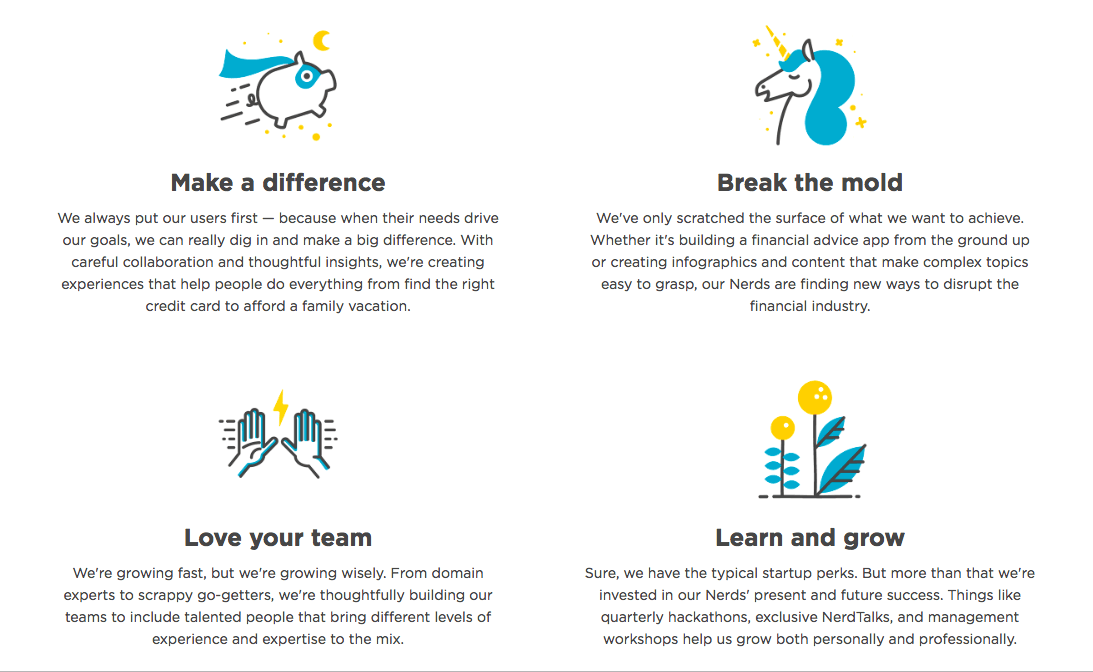
NerdWallet is a website full of helpful financial advice for everyday people. Their About page is just another example of how they bring levity and energy to financial information.

For example, their values are accompanied by clever animations. Have you ever seen pigs flying? You will here. These animations bring their brand personality to life in an entertaining way, and they’re definitely not your dad’s financial planning resource. Clearly, they’re for a younger target audience that shares their unique brand values.
10) Ben & Jerry’s
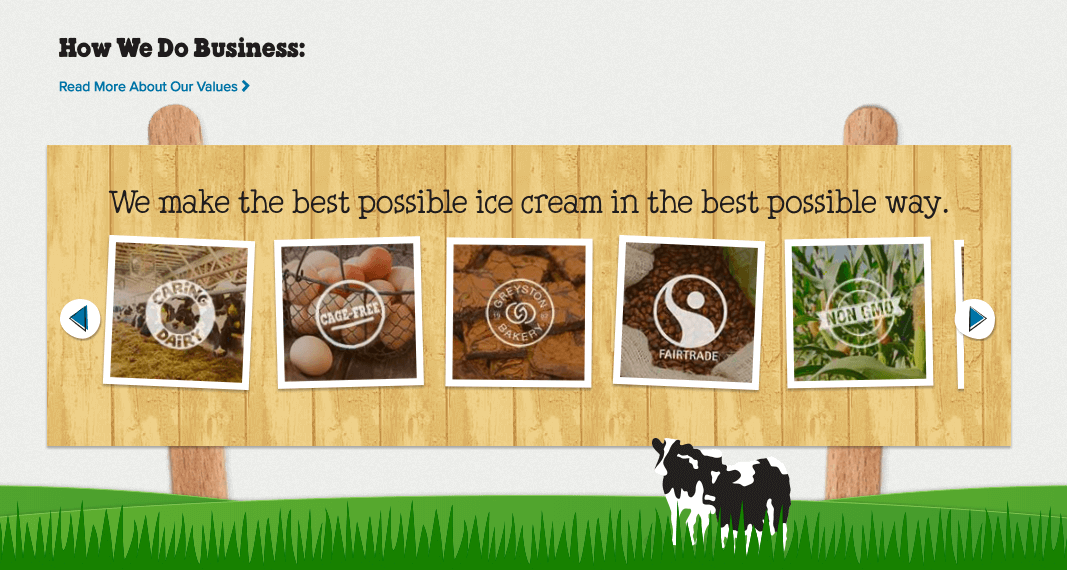
Ben & Jerry’s is not just concerned with making delicious ice cream. They care about doing business in a way that benefits everyone. This includes everyone from their suppliers to their neighbors—a classic example of a business challenging the status quo.
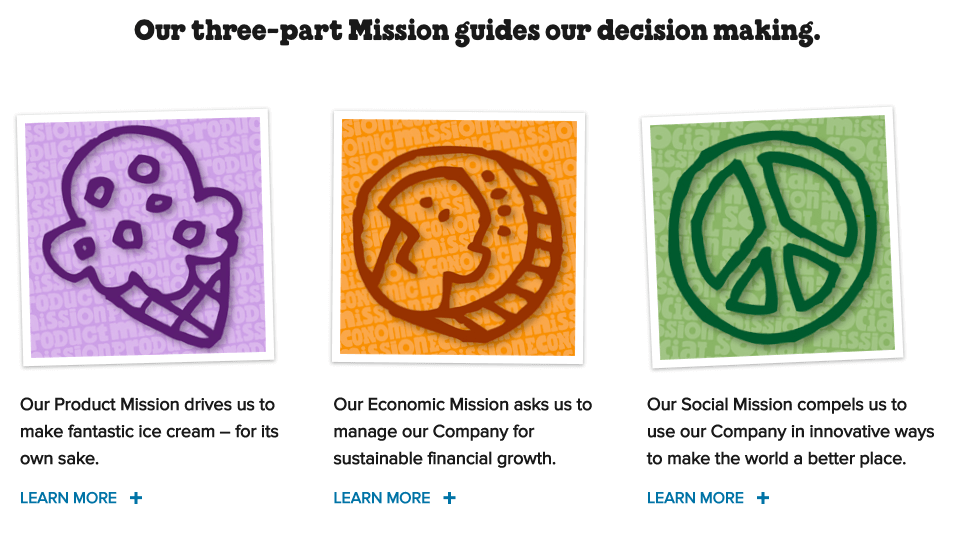
As we see in their values page, they are hyper-transparent about the way they do business. They are open about the causes they support. They provide all the info you would ever want to know, providing videos about their supply chain, their ingredients, and more.
Why Brand Values Are Important
You might wonder why we spend so much time discussing core values. Why do brand values matter so much in the current market? The reality is that the landscape of business has changed. In the past few years, we have seen a massive shift in consumer behavior. Research shows that consumers are increasingly looking to support companies that share their beliefs.
Nowadays, brand loyalty is no longer just about price or convenience. It is about alignment. When a customer sees that a brand shares their personal values, they form a deeper connection, which drives purchasing decisions, turning a one-time buyer into a lifelong advocate. (This is why even massive entities like Coca-Cola spend millions reinforcing what their brand stands for.)
Furthermore, company values attract the right talent—and that has as much to do with long-term success as anything else. Potential employees want to work for a business that has a soul. They want to know their labor contributes to a brand vision they believe in. When you clearly state your guiding principles, you attract people who fit your company culture. You invite the collective genius of like-minded individuals to grow your business.
Lastly, whether you are a small business or a global enterprise, your values are your anchor. They prevent you from drifting when the market gets tough. They help you avoid the status quo and innovate with purpose.
How to Share Your Brand Values
Content marketing is one of the most powerful ways to connect with people. But how do you tell your brand story in a way that makes people want to learn more? How do you make them eventually buy from you? You do this by creating compelling content.
If you are just starting to tell your brand story through content, or looking for creative ways to share your values effectively, here are some of our best tips to get started.
1. Know Your Own Brand Heart
Before you can share your values, you must define them. (Again, this includes your purpose, vision, mission, and values.) Download our free workbook template to identify your brand’s core principles, and take the time to really dig deep about what truly matters to your business.
2. Consider Your Website
In the digital world, your website is your first impression. It is the digital storefront for your business, while your social presence acts as the window display. You must spotlight your brand values where you can. Whether it represents a simple statement in your product copy or a manifesto on your About page, make it visible. Do not make people hunt for your guiding principles, and make sure your brand vision is clear from the moment they land on your page. This improves the customer experience immediately.
3. Spotlight Your People
Your company culture is built by your people. Showcase the people behind your brand in unique and creative ways. Whether it is an employee feature on social media or a bio on your site, put a face to your brand—or put many faces to it. This humanizes your business practices and shows that your company operates through the hard work of real individuals.
4. Provide Transparency Into Your Process
Your brand values should be evident in every aspect of your business. This ranges from the way you treat your employees to your manufacturing process. Look for ways to tell the story of your brand at every level. If you have a sustainable supply chain, talk about it. If you source locally, show it. Transparency builds trust. It proves your strong values are not just marketing fluff. It shows you handle your business operations with integrity.
5. Turn Your Culture into Content
The way you do things behind the scenes says everything about who you are. It shows how you walk your talk. Luckily, your company culture is a goldmine for content. When you share your internal culture, you are sharing your company’s brand values in action. This resonates with loyal customers who want to support good workplaces. Check out our Culture Marketing 101 guide to find out how culture can inspire your next content idea.
6. Refine Your Brand Messaging
Inconsistent messaging confuses the target audience. Clear messaging amplifies your competitive advantage, so your messaging must align with your heart. Use our free brand messaging template to make sure your tagline, value prop, and messaging pillars are all aligned.
7. Tell a Consistent, Cohesive Brand Story
Consistency is key to building a strong brand, and a disjointed story is hard to follow. Learn about the keys to a compelling brand story to capture people’s attention from the jump. If your brand values change every week, people will not trust you. Stick to your guiding principles to ensure your brand storytelling remains engaging and true to your nature.
8. Get Inspired by Other Brands
Sometimes the best way to learn is to watch others. Take a look at how these 7 brands tell their brand story through content. Even if you are a small business, you can learn from how Coca-Cola or Ben & Jerry’s handle their messaging.

9. Refine Your Brand Strategy
A solid strategy ensures that your core brand values are integrated into every decision. It helps you navigate the status quo and carve out your own path. Download our free Brand Toolkit to complete your strategy if you have not done one before.
10. Make It Visual
Words are great, but visuals stick. Think about the examples of brand values we shared earlier. Kashi used illustrations. NerdWallet used animations to tell its story. Look for creative ways that design can communicate your company’s values.
11. Live Your Values
This is the most important part. You cannot just state your values; you must live them. Your business owner mindset should reflect them. Your customer relationships should embody them. If you claim to care about the environment, ensure your business promotes environmental protection. If you claim to care about people, treat your staff well. Strong values are demonstrated through action, not just words. Authentic action creates loyal customers.
12. Review Regularly
Business changes. The world changes. It makes sense to review your values periodically. Are they still relevant? Do they still reflect who you are? While core beliefs rarely change, the way you interpret them might. Ensure your guiding principles evolve as your company operates in new markets to keep your brand vision fresh.
13. Educate Your Team
Your employees are your brand ambassadors. Make sure the entire company understands the strategic value of your beliefs. Hold workshops on your brand’s mission. Make your company’s core values part of the onboarding process. When your team understands the brand values important to the organization, they can communicate them to the world.
14. Be Bold
Don’t be afraid to take a stand. Some of the great brand values we have seen come from companies that are not afraid to be controversial. Ben & Jerry’s is a prime example. Swell fights against plastic. Being bold attracts the right people. It repels those who do not fit your target audience, which is actually a good thing. It clarifies your competitive position.
15. Listen to Feedback
Your customers will tell you if you are living up to your values. Listen to them. Their feedback is invaluable for refining your business operations. It helps you identify where your brand loyalty is strong and where it is weak. Use this feedback to strengthen your brand communications.
Conclusion: The Value of Values
Building a business based on strong brand values is not a trend. It is the new standard. It is how you distinguish your own brand in a noisy world and build strong relationships that weather any storm. Whether you are looking at brand values examples from Everlane or Virgin Media, the lesson is the same: be authentic, be transparent, and be specific.
Above all, remember that content marketing is a practice. The more you do it, the better you become, and the more you learn. That said, it is not always easy to get everything done yourself. Creating compelling content that accurately reflects your core values takes time and effort. It requires a deep understanding of brand strategy.
If you need a partner to help you keep your sanity, reach out. We would love to help you tell your brand story in any way possible.




Let's upgrade your marketing game
Get fresh tips, how-tos, and expert marketing advice every week. (15,000 people already are.)



This article provides insightful examples of how brands effectively communicate their core values. It’s a great resource for businesses looking to strengthen their brand identity and build deeper connections with their audience.