
- What is brand drift?
- Brand drift isn’t new, but it’s evolving
- The invisible risks of brand drift
- The old brand governance model won’t hold
- Content systems: a framework for combatting brand drift
- Additional considerations for brand leaders
- Start small by mapping your brand drift
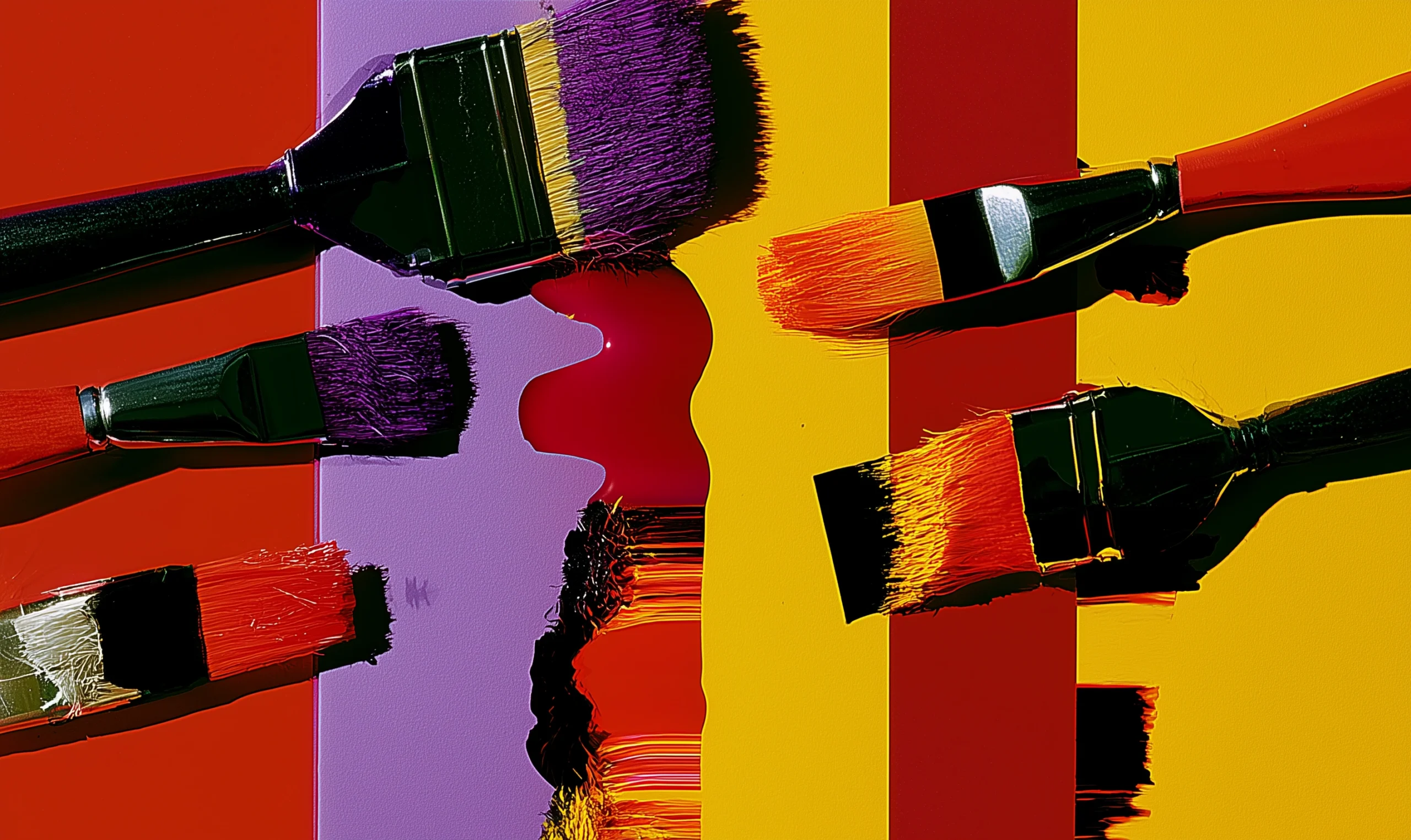
As long as a company remains in business, its brand is a living, breathing organism. And like any living thing, it doesn’t hold perfectly still. Every email, sales deck, product screenshot, and offhand social reply adds a brushstroke to a picture no single person fully controls.
That’s true by design: A brand only matters because lots of people carry it into the world, and the moment it leaves the brand team’s hands, some amount of variation is inevitable.
So the job of brand leadership has long been to contain that variation. You define what the brand is and isn’t, write the guidelines, build the review structure, and work to earn a reasonable level of compliance across the organization. Enforcement was always the eternal bugaboo. But aside from the genuinely unpredictable moments, like a live event or a frustrated customer service exchange, large and disciplined organizations mostly had it figured out.
It’s trite but true: AI has changed that. A new generation of tools has handed creative capability to nearly everyone in the organization, and the quiet machinery that used to keep a brand consistent is buckling under the volume.
What is brand drift?
Brand drift is the gradual, unintentional divergence of a company’s creative output from its intended identity. It rarely comes from a single bad decision. It accumulates through thousands of small ones, each made in good faith by someone working slightly outside the brand’s center of gravity: a logo lockup stretched to fit a layout, a tone of voice softened to feel friendlier, a color that’s close but not exact.
On their own, none of these choices registers. In aggregate, they pull the brand off its mark.
It’s important we distinguish this from intentional brand evolution, which can occur within single projects or campaigns (despite this practice being fraught with its own issues). In these instances, marketers can use a project as a sort of controlled miniature laboratory to “push” the brand into new spaces, test the edges, update to fit the moment.
But this isn’t the kind of brand drift we want to focus on, because typically those advocating for ‘pushing the brand’ have a level of brand knowhow which mitigates some of the risk of stepping out of bounds.
Instead, the brand drift worth discussing — the kind truly plaguing enterprise creative output — is haphazard and random, the result of a team of people with very different ideas, tastes, and capabilities, trying their best to move the company forward.
You can picture the types of scenarios when brand drift happens:
- A social manager needs a graphic for a post going out in an hour, so they make one that looks fine.
- A web manager drafts a blog intro and approximates the brand’s tone from memory.
- A sales rep rebuilds a slide because the approved template didn’t quite fit the pitch.
- A product marketer writes interface copy that’s clear but a little flat.
None of these people are careless, and none of them are wrong to act. They’re moving the company forward with the judgment and tools they have. But each one is making a brand decision without the full context a brand expert would bring, and each small call nudges the work a few degrees off course.
Brand drift isn’t new, but it’s evolving
In the past, this random divergence happened relatively slowly, as the high-stakes creative was left to the experts (read: brand design team), and the rest was often caught and corrected by this same group. And, it was easy to catch: Design by a non-designer looked like PowerPoint, and copy by someone other than a writer sounded like a Craigslist ad.
In this environment, the brand team’s well-defined guidelines, paired with the review queue, felt like rigor.
The last few years have shown us that it wasn’t.
It was simply a bottleneck that quickly became a choke point that broke creative flow and delayed content launches.
It was governance by constraint.
Now, a whole new population of creators has been set loose by blanket executive mandates to “use AI,” however and wherever that may be. So naturally, brand drift is accelerating.
The invisible risks of brand drift
Old drift was obvious, dissonant, weird, low-res. New drift is polished, logical, believable. But safe, and pulling toward the middle. And here’s the unexpected truth: this will hurt strong brands the most, because they have the most distinction to lose.
The middle is getting crowded—everyone can be “pretty good” nowadays. Brand leaders mustn’t be lulled to sleep by this new comfort, because letting distinction slowly slip is death.
You can already observe this happening. Pull up ten SaaS homepages and try to tell them apart. Or strip the logos off their headlines and try to match each line back to the company paying for it. You can’t.
And to some extent, the pull was always there. Industries have a funny way of “herding” towards a common look, feel, and voice, which is partly why one of the most common business problems we’re tasked with is differentiation.
The difference now? AI is just accelerating the trend by making it easier to produce, in a way that seems inexpensive.
There’s another difference worth naming: this drift is directional. Where human hands once scattered a brand in as many directions as the people who touched it, AI-empowered creative converges toward the average, which is to say, toward your competitors’ brands.
The old brand governance model won’t hold
It may just be that the damages of using AI without governance and guardrails is, however, more expensive in the long run. When the investment you’re making nets worse outputs, and even causes brand damage, one could argue that it’s more costly than the time and materials cost to produce quality creative the “old way.”
We’ve watched a version of this story play out before. A decade ago, companies embraced Bring Your Own Device (BYOD), letting employees use personal phones and laptops for work. The productivity case was obvious and adoption was immediate. The security case took longer to surface. Every unmanaged device was a new door into the network, and the old perimeter model, built for a world of company-issued hardware behind a firewall, wasn’t designed for it. IT leaders didn’t respond by banning the devices. They built a new model for governance and compliance, one that assumed access would be distributed and designed controls around that reality.
We lived this theme alongside our clients. It was the through-line of campaigns we created with Microsoft, SAP, SentinelOne, and Cylance, companies all wrestling with the same tension between democratized access and centralized control. In every case, the resolution was a smarter governance model: one that assumed distributed access and built the controls to match.
Brand is now facing its own BYOD moment. Executive mandates to “use AI” have handed creative capability to everyone, all at once, and the brand perimeter, defined by guidelines and a review queue, was never built for that volume or that speed.
In the new era of AI creative productivity, it’s clear that we need a new brand governance paradigm.
Content systems: a framework for combatting brand drift
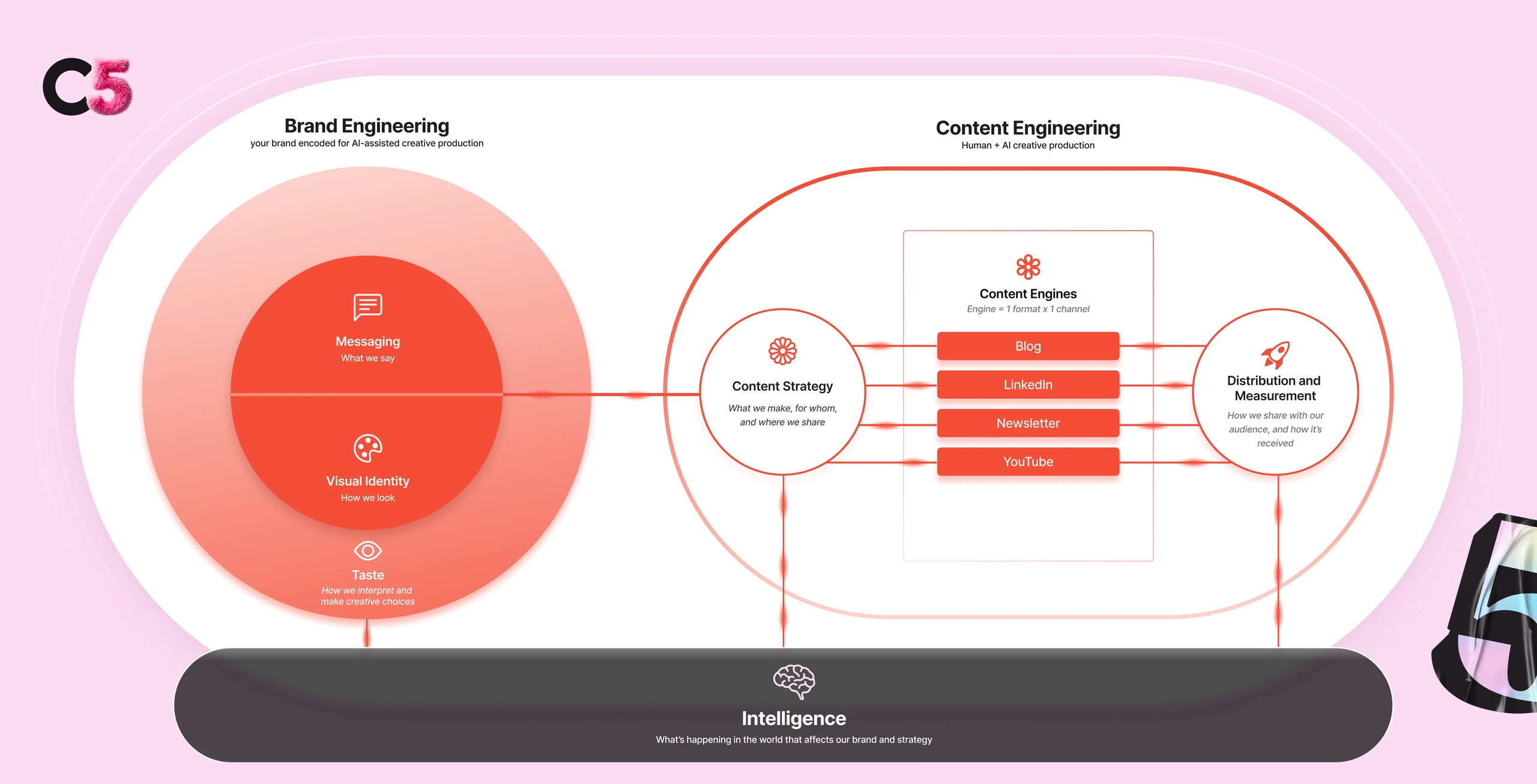
The antidote to brand drift in an AI-enabled creative operation is what we call a content system. The system combines two major components:
- Brand engineering is the work of turning your brand from a document into a system. Guidelines describe a brand to humans. Brand engineering encodes it, so the same judgment can be applied at scale by both people and machines. Instead of a 90-page PDF that lives in a folder, you build structured, queryable brand assets: the rules, the references, the taste, and the non-negotiables, captured in a form that software can actually use. The goal is to make brand judgment available wherever creative gets made, not only inside the heads of your senior team.
- Content engineering is the production layer that sits on top. It’s the set of workflows, tooling, and connective tissue that pulls your engineered brand into the surfaces where content actually gets made, whether that’s a social graphic, a landing page, or a sales deck. Done well, content engineering means a creator no longer has to remember every rule or wait in a queue to be corrected. The brand shows up with them, in the tool, at the moment of creation.
Additional considerations for brand leaders
A content system is the core of the fix, but a few organizational shifts make it hold.
Reposition the traditional brand team (further upstream). The classic model puts a small group of experts at the end of the line, as the last check before work goes out. In an AI-enabled operation, that group is far more valuable at the front: defining the system, encoding the judgment, and curating what good looks like, rather than reviewing a volume of work it can never hope to clear. The team’s mandate shifts from gatekeeping to enabling.
Build your tools from the brand out. It’s tempting to adopt whatever AI tool is loudest this quarter and bolt your brand on afterward. The better order is the reverse. Start from your engineered brand and choose or build tooling that’s grounded in it, so everything produced inherits your standards by default instead of importing a generic model’s idea of “good.” A properly engineered brand is portable to the most capable tool of the moment.
Double down on talent. When the baseline of “pretty good” is free and instant, the premium moves to the people who can define taste, not only execute it. Your most talented designers, writers, and strategists become more important, because their judgment is the raw material your system is built from. This is the moment to invest in that talent and put it at the center of the system.
Dig in and sharpen the parts of your brand that resist averaging: define the anti-patterns you uphold, codify the taste decisions of your most talented designers, document the words and phrases you never say. Find the unspoken non-negotiables and make them explicit.
Start small by mapping your brand drift
Here’s how the best brand teams will start: use brand drift as a map. Relate to it not as a defect or error, but as a signal of what’s left undefined.
Consider flipping the traditional review queue from a bottleneck enforcing rules to a source of brand intelligence that loads into every surface your team creates on. Because the old paradigm just can’t keep up with the pace of creative today. And we now have the tools to enhance and empower branded content at the moment of creation rather than review and correct it after.
In the coming months and years, we will all face this choice a thousand times: converge passively, unintentionally, invisibly, or diverge with intention, discipline and conviction. Only one choice leaves you with a story worth sharing—which is your last remaining competitive advantage.



Let's upgrade your marketing game
Get fresh tips, how-tos, and expert marketing advice every week. (15,000 people already are.)