Remember when you knew exactly when a buyer showed up? They downloaded your white paper, landed in a nurture track, and got handed to sales. You could see every step (and take credit for most of them).
That buyer is gone. Today’s buyer reads reviews, asks peers, and has ChatGPT rank your category before you know they exist. By the time they raise their hand, they already have a shortlist, if you’re lucky enough to be on it. So what do you do when the decision happens somewhere you can’t watch?
Every list you miss is pipeline you never get a shot at.
Cristina Bravo Olmo, VP of Marketing at ThoughtSpot, joined our recent episode of the Best Story Wins podcast. She has spent nearly 25 years in B2B SaaS, including an early stint in security and a run at Marketo just as inbound marketing took off. She knows the playbook most of us grew up on, which is why her read on what changed carries weight.
The Funnel Went Dark
Bravo Olmo says the majority of a buyer’s research now happens before a marketer even knows they exist. AI search is speeding that up. Some marketers call this the dark funnel: research on review sites, in peer conversations, and inside AI chats your analytics never touch. She puts it plainly: “What’s changed is that the funnel hasn’t disappeared, it’s just become a lot harder for us … to see.”
That changes your job. You used to shape the shortlist because you knew early who was searching. Now you find out whether you made it. Most marketers would call that a loss of control (and it is). Bravo Olmo loves it anyway, because it forces every vendor to be more intentional about how it positions itself.
So who builds the shortlist? The market does, from what reviewers, peers, and AI already say about you. They’ll repeat your story only if it’s distinct and consistent everywhere buyers look. Here are four ways to make that happen.
4 Ways to Win the Shortlist Before a Prospect Reaches Out
1) Assume AI is already describing your brand to your buyers.
Buyer’s guides worked well five years ago as part of a content strategy. But now, AI does that work. “They don’t need those buyer guides anymore because those AI search engines … are their buyer guides,” Bravo Olmo says. Buyers use AI to understand the market, compare vendors, and work through problems they’ve never solved before.
What AI tells them draws on everything published about you (by you and by everyone else), so if that material is vague or contradictory, the answer will be too. Her team has worked to make sure AI positions ThoughtSpot accurately for the customers it wants to grow with. She sees the upside: “It’s forcing marketers to be very intentional and very clear and very honest and consistent about what they do … so that that recommendation is a strong one.”
How do you know what AI is saying? Ask it. Have ChatGPT or Claude compare you with two competitors for your core use case. Does the answer name what actually sets you apart? (We use AI answers as a brand diagnostic with clients because they expose inconsistencies in a brand’s story fast.)
Tip: Run that comparison prompt every quarter, and treat every wrong or generic answer as a brief for content you need to publish.
2) Differentiate on what you understand, then put it in everything you publish.
Features stopped protecting most SaaS brands a while ago. As Bravo Olmo points out, any software company can put dashboards into its product. So when she explains ThoughtSpot Embedded, she skips to what fits the customer’s workflow. It’s an AI analyst inside their app that answers plain-English questions from their own data. That kind of difference starts with the customer: “It’s really, really deeply understanding your customer, your ICP, their business, their unique challenges.”
For the shortlist, that difference only counts if buyers meet it everywhere they research: your site, your content, what peers repeat, and what AI summarizes. If your blog, sales deck, and product pages each tell a slightly different story, AI will average them into something bland (and so will your buyers).
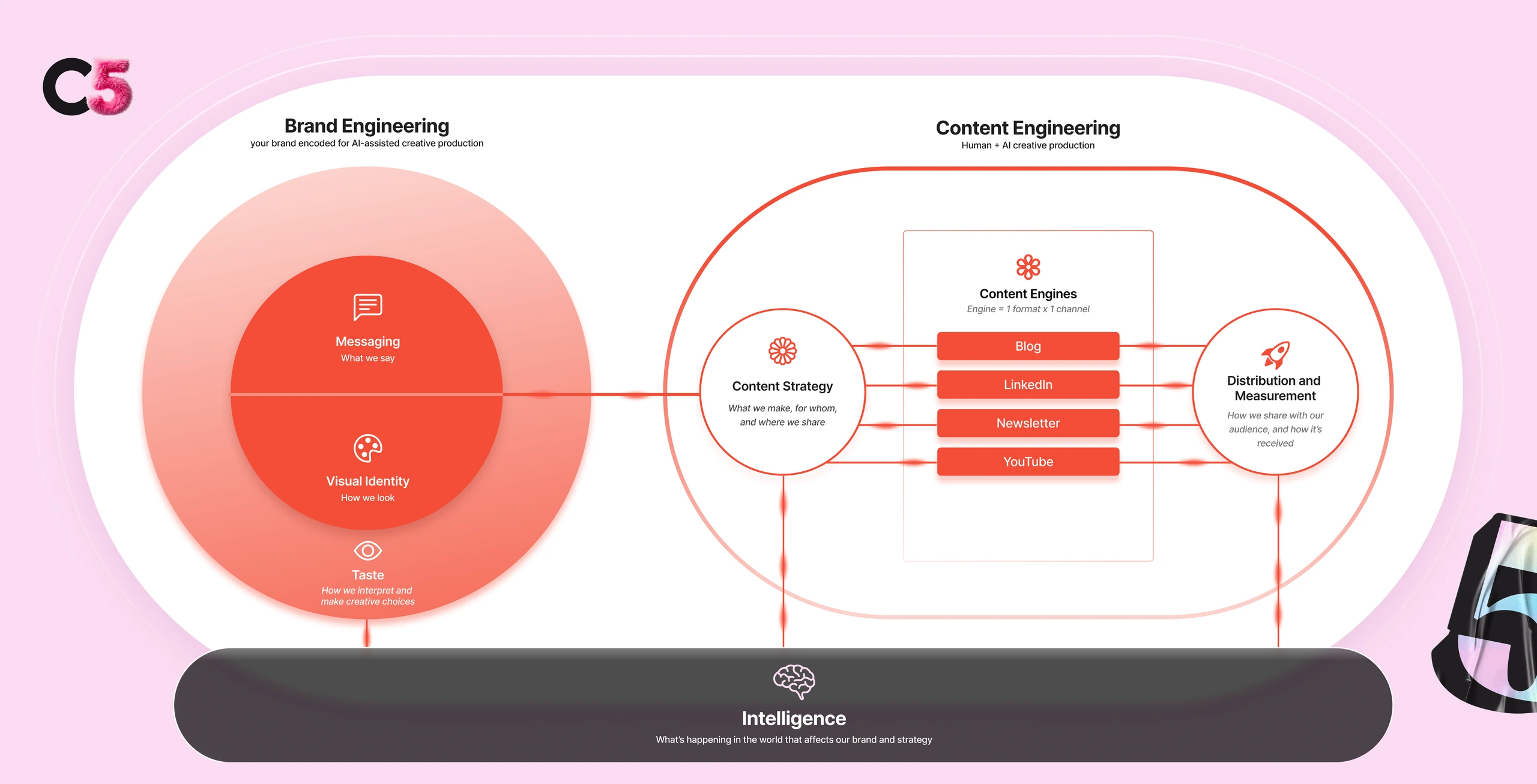
That’s the job of a content system. Brand engineering encodes what makes you different into tools your team and your AI can use: a message hierarchy, proof points, and voice rules. Content engineering builds those into the briefs, templates, and workflows behind every asset, so buyers meet the same claims wherever they look. If you haven’t pinned down that difference yet, start by learning how to differentiate your brand.
Tip: Write down the two or three customer problems you understand better than any competitor, and what that lets you claim. Then audit last month’s content and count how many pieces make one of those claims.
3) Get your whole team technical before the first call.
Bravo Olmo says technical conversations that once came midway through a sales cycle now happen right out of the gate. That pressure lands on demand gen, content, and events teams, who used to lean on product teams for technical depth. “I think all of us need to challenge ourselves to be much more technical much sooner,” she says.
Why so early? Buyers arrive having done most of their research, and many are re-architecting their stack without a blueprint, under real pressure to get it right. (They’re making career bets, and they know it.) Bravo Olmo wants marketing that reflects how big and complicated that decision is. In practice, your research-phase content has to answer what a buyer would have asked a sales engineer.
Tip: Give non-PMM marketers a standing product briefing and a short list of the technical questions buyers ask most, then build content that answers them before anyone asks.
4) Put buyers in a room when the screen overwhelms them.
AI has made content so easy to produce that buyers are buried in it, much of it low quality. Bravo Olmo sees that overwhelm pushing people toward events, where they can ask hard questions in person. “In a two-hour dinner, you can accomplish more meaningful research than what you could do over many weeks online in a digital format,” she says. ThoughtSpot is scaling up its events. A dinner is one of the few times you’re in the room while a buyer forms an opinion.
She keeps it in balance, though. Plenty of marketing leaders call AI search their top priority, and she agrees it matters. But she calls it a mistake to over-index on AI search and abandon events. Your story has to hold up in an AI answer and across a dinner table.
Tip: Pick one small format for your top accounts (an executive dinner or a working session), and turn what you hear in the room into content.
Buyers Build the Shortlist From Your Story
For years, the B2B playbook was simple: find what works and do more of it. Bravo Olmo thinks that era is ending, and she’s excited about what replaces it. “We need to go back to the fundamentals and think about our buyer … and just go deeper and create more substance with what we’re pushing out,” she says.
- Be differentiated where buyers research. Your difference has to be specific and technical enough for reviewers, peers, and AI to repeat it accurately.
- Be consistent across everything. Check what AI says about you each quarter, and let a content system carry one version of your story everywhere.
- Build relationships beyond your own channels. Buyers weigh what peers and creators say alongside what you say, and a small event gives them a story worth repeating.
Then map your B2B buyer journey around the research you’ll never witness, so you know where your story needs to show up first.
Want more from Bravo Olmo? Listen to the full episode to hear why she thinks AI search may finally free marketers to write for people again, how a rough Gemini experiment became the DIY Dave campaign, and why she’s comfortable shipping at 98%. And if you want help building a differentiated story your content can carry, see how we approach content strategy.


Let's upgrade your marketing game
Get fresh tips, how-tos, and expert marketing advice every week. (15,000 people already are.)