At Column Five, we’ve started using Claude Code to systematically retrofit our case study pages for search engine optimization (SEO) and answer engine optimization (AEO) performance. This post covers why case studies are an under-leveraged bottom-of-funnel (BOFU) asset for B2B agencies, how the workflow is built, what we’re seeing one week in, and how to adapt the same play with the free playbook at the bottom.
Why Case Studies Are Important Players in Our BOFU Stack
At Column Five, we’ve been pushing hard on BOFU discoverability across both SEO and AEO. Our agency-comparison pages, services pages, and the B2B SaaS agencies pillar all sit in that ecosystem. Historically, case studies have been the under-loved layer of it.
In practice, the pattern is consistent across most B2B agency sites. Case studies get treated as proof for prospects already on the site, and they rarely operate as entry points for buyers actively researching a work-type or vertical. That was our pattern for years, too. Case studies were story-first artifacts produced by our creative team to make the work look great, but never much run through SEO or AEO disciplines.
Then we noticed something in the data. Even without any optimization, a handful of our case studies were quietly accumulating impressions and clicks on industry and work-type queries. The VideoAmp SaaS website redesign case study was drawing search traffic on intent queries we never targeted. The HubSpot Ventures rebrand case study was ranking on a brand-navigational query at position 7.8 with a 0.6% click-through rate (CTR). That low CTR was its own signal: the page was close to the right answer for the wrong question.
The broader industry pattern lined up with what we were seeing internally. Recent analysis of AI referral traffic shows that case studies and pricing pages have stayed durable while top-of-funnel “what is” content has collapsed.
If you’re a B2B brand trying to win AI citations, one asset class to invest in is the one that many brands treat as an afterthought.
The Claude Skill We Built (and How It Works)
First, we should offer a disclaimer that many brands will be able to build a simpler workflow than ours. Due to the nature of our CMS build (namely, that our case study posts were custom-build in WordPress, and therefore can’t be controlled via the standard WordPress MCP), we still need to make many of the workflow’s updates manually.
For sites built more simply than ours, some of the steps we’re about to explain can be simplified or skipped.
The way our current Claude Code skill begins is by encoding the workflow once and treats each case study as an input. The skill is REST-only for inputs (Google Search Console (GSC), Pendium, DataForSEO, and the WordPress REST endpoints) and produces an upload manifest. The operator pastes anything into WordPress admin that the API won’t accept programmatically.
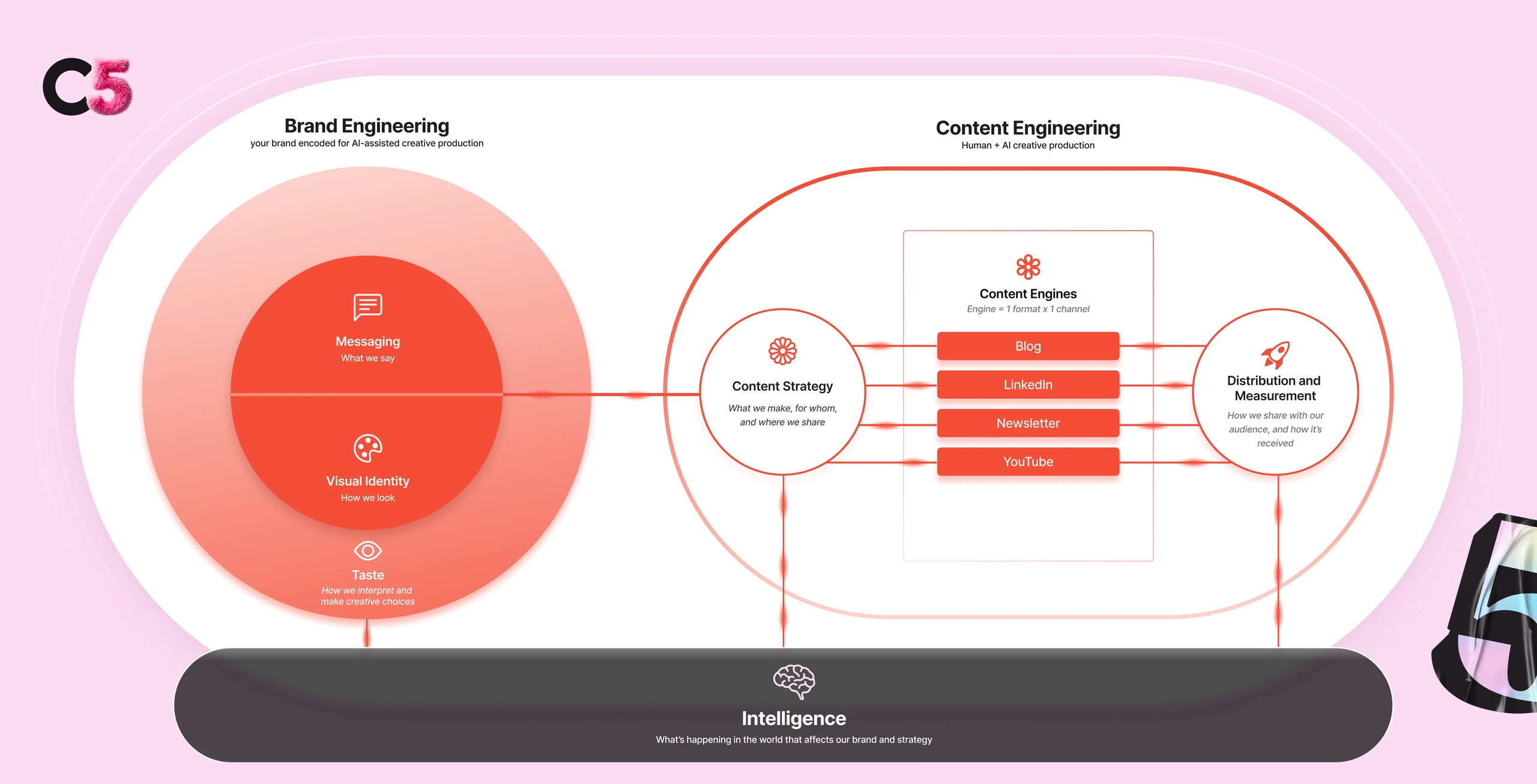
The structure of the case study optimization skill is 9 phases:
- Audit: pull GSC, Pendium citations, DataForSEO, and the live image inventory in parallel.
- Slug and focus keyword: unbranded discipline; brand names go at the end of the slug as redirect anchors.
- Yoast meta: SEO title, meta description, focus keyphrase.
- Body recommendations: H1, H2 rewrites, executive summary, parked FAQ drafts.
- Images: REST download, WebP conversion at quality 85, four-field metadata per image.
- Internal link sweep: the one path where the skill writes back to WordPress programmatically.
- Manifest: a single deliverable the operator pastes into WordPress admin.
- Verification: cache-busted live-URL curl checks against the expected output.
- Notion calendar: provenance entry and a 30-day re-check date.
For context, Anthropic has published a similar internal pattern using Claude Code for ad optimization, and Search Engine Land has covered the broader framing of Claude Code as an SEO command center.
The unlock for us was running it on our own portfolio inside an agency context.
A Repeatable B2B Case Study Optimization Workflow
In practice, each retrofit takes roughly 30 to 60 minutes. The skill does the audit, surfaces focus-keyword candidates with DataForSEO volume and keyword difficulty (KD), verifies SERP intent fit, and then generates the manifest with all the copy and assets staged.
Three pieces of the workflow are doing most of the lift:
- Unbranded keyword discipline. Brand-name-only slugs like
/case-studies/hubspot-ventures/capture navigational intent the case study can never win on. Switching to a/case-studies/venture-capital-rebrand-case-study-hubspot-ventures/pattern preserves the brand anchor while pointing the page at unbranded research queries it actually can answer. - Image pipeline. Case studies on our site are image-heavy by design. Running each asset through a Python image-processing pass to convert to WebP at quality 85, then populating all four WordPress media fields (Title, Caption, Alt, Description), is where the page-weight wins come from.
- Internal link sweep. Every retrofit ends with a programmatic pass across our BOFU cluster pages, agency listicles, and the case studies hub, updating inbound links to the new canonical URL with keyword-loaded anchor text.
Early Results, One Week In
We started this approach about a week ago, and the technical lift is measurable. The hero example so far is the VideoAmp SaaS website redesign case study, which we took from roughly 40 MB of total page weight to under 5 MB. That’s close to a 90% reduction, driven mostly by the WebP image pipeline and the four-field media metadata pass.
The first batch of retrofits has included the pages for HubSpot Ventures, Instacart Ads, Fieldguide, and two VideoAmp studies. In these pages we’ve realigned slugs and keyword targeting to match the actual industry and work-type intent each study can compete for, according to the data pulls from Pendium and DataForSEO.
We’ll revisit this article with rank, impressions, and AI-citation deltas in a few weeks once the GSC and Pendium re-scan data comes back.
To think we had such heavy images obstructing our SEO and AEO results is painful! Rookie mistakes, really. But the workflow is helping get us back on track quickly.
Build Your Own AI-Powered Case Study Optimization Workflow (Free Download)
If you want to run something like this on your own portfolio, we put together a free kit: a methodology framework that runs on any toolchain, plus a Claude Code skill scaffold you can fork and adapt. Your search console, your AEO tool, your keyword tool, and your content management system (CMS) REST endpoints will all need to be swapped in.
Many of our learnings are embedded in this file, to save you setup and trial-and-error effort.
Download the Case Study Optimization Playbook (free) and drop it into your LLM of choice, asking how you can customize it for your own library.
Tip: Start a new chat with your LLM, provide it the .pdf file above, and ask: “Step by step, how do I set up this optimization workflow tool for my own company and our tech stack?”
Note that you may need to subscribe to new tools that allow the complete data profiling. We recommend dataforseo.com and pendium.ai for cost-effective, open access to SEO and AEO data, respectively. If you are a customer of ahrefs or SEMrush, they also provide data connector options at certain subscription levels.
Start Leveraging Case Studies More Effectively
Case studies are one of the most under-leveraged assets on most B2B agency websites. The combination of durable AI referral traffic, intent-driven prospect research, and the inbound link gravity case studies pass to comparison and services pages makes them worth systematic work. If you’re inventorying your own B2B case study examples and wondering whether they’re earning their keep, this is a workable starting point.
As always, feel free to get in touch if you’d like to work through your AI-powered content system together.



Let's upgrade your marketing game
Get fresh tips, how-tos, and expert marketing advice every week. (15,000 people already are.)