

A brand story is the foundational narrative that defines who your company is, what you believe, and why it matters to the people you serve. This guide explains why most B2B companies struggle with brand story, not because they lack one, but because they haven’t built it into a system. You will learn a five-layer framework for constructing a brand story that doesn’t just live on your About page but fuels every piece of content your team produces.
What Is a Brand Story?
A brand story is the narrative that connects who your company is to why your audience should care. It goes beyond a tagline, a mission statement, or the paragraph on your About page that nobody reads twice. In essence, it is the through-line that runs beneath everything you say and do, the reason people remember you when they encounter a hundred companies that look similar on paper.
At its core, a brand story answers three questions:
- What do you believe about your industry that most companies won’t say?
- What experience or evidence makes that belief credible?
- What changes for your customer when they adopt that belief?
Every B2B company has answers to these questions. The problem is that most have never shaped those answers into something their teams can actually use. Instead, the beliefs live in the founder’s head, the sales team’s talk track, or the pitch deck that gets rewritten every quarter. As a result, they never get translated into a durable narrative structure that marketing, sales, and product can all draw from consistently.
That gap between what a company knows and what the market hears is where brand stories go to die. And it is more common than you would think. A study by Lucidpress found that inconsistent brand presentation costs companies an estimated 10–20% of annual revenue.
A brand story done well goes far beyond a creative exercise you do once and file away. The companies that win with brand storytelling treat their story as infrastructure. It is a system that generates content, not a document that gathers dust.
Why Most B2B Companies Get Brand Story Wrong
Most B2B companies don’t have a bad brand story. In reality, they have no operational brand story at all. What they have is fragments: a positioning statement from a rebrand two years ago, a set of values on the careers page, a founder narrative that the CEO tells in podcast interviews but nobody else can replicate.
The result is a familiar pattern. Marketing publishes content that sounds polished but generic. Meanwhile, sales tells a different, sharper story in calls, one that actually resonates, but it never makes it into the website or the blog. And when someone asks “what makes us different?” in a planning meeting, the room goes quiet or fractures into five competing answers.
The root cause is a systems failure, not a storytelling failure.
The POV Problem
After working with hundreds of B2B brands over the past 17 years, we have noticed something consistent: most companies that come to us saying they need help “telling their story” actually have a deeper problem. What they haven’t figured out is what they believe.
Ask what they do and the answers come easily. They can describe their product, their features, their process. But when you ask what they believe about their space, what conviction drives their approach that competitors don’t share, you get either silence or a platitude that could apply to any company in the category.
A brand story without a point of view is just a corporate bio with better copywriting. It describes without distinguishing.
This is why the story gap exists: the distance between what smart companies actually know and what the market hears from them. Closing that gap starts with articulating a genuine point of view, not wordsmithing your value prop for the fifteenth time.
AI Made This Urgent
The POV problem has existed for decades. However, what has changed is the consequence of ignoring it.
AI search platforms (ChatGPT, Claude, Perplexity, Google AI Overviews) are now part of how B2B buyers research vendors. 84% of B2B buyers used AI tools for vendor discovery in 2026, up from 24% just twelve months prior. These platforms synthesize everything published about a brand across the web: blog posts, landing pages, case studies, third-party mentions.
When a brand’s content footprint tells a coherent, distinctive story, AI platforms can form a clear picture of what the company stands for. That clarity earns citations and recommendations.
When the content footprint is scattered (generic messaging, no consistent POV, language that sounds like every competitor) the AI has nothing distinctive to surface. Consequently, the brand doesn’t get cited, because the algorithm can’t form a coherent picture from the noise.
Brand narrative incoherence is now a visibility problem, not just a branding problem. The companies that invest in a clear brand story are building the foundation for how machines understand and recommend them.
Brand Story vs. Brand Storytelling: Why the Distinction Matters
These terms get used interchangeably, but they describe different things, and confusing them leads to wasted effort.
Brand story is the foundational narrative: who you are, what you believe, what you do, and why it matters. It is a fixed asset that changes only when the company’s strategy or positioning fundamentally shifts.
Brand storytelling is the ongoing practice of expressing that story through content, campaigns, and experiences across channels and touchpoints. By contrast, it is dynamic, adapting to audiences, formats, funnel stages, and cultural moments.
Think of it this way: your brand story is the source code. Brand storytelling is every application built on top of it.
Most content marketing problems trace back to teams trying to do storytelling without having the story settled first. As a result, they produce blog posts, videos, and campaigns that are individually competent but collectively incoherent, because there is no underlying narrative holding them together. Every piece reinvents the message from scratch.
When the brand story is solid, content production gets easier, faster, and more consistent. Writers don’t start from zero. Instead, they start from a shared foundation and adapt it to the format and audience at hand. That is the difference between a team that publishes content and a team that runs a content engine.
The Five Layers of a Brand Story That Actually Works
Generic brand story frameworks give you a fill-in-the-blank template: hero, conflict, resolution, call to action. That structure has value (it mirrors the dramatic arc that audiences respond to naturally), but it is not enough to power a content operation.
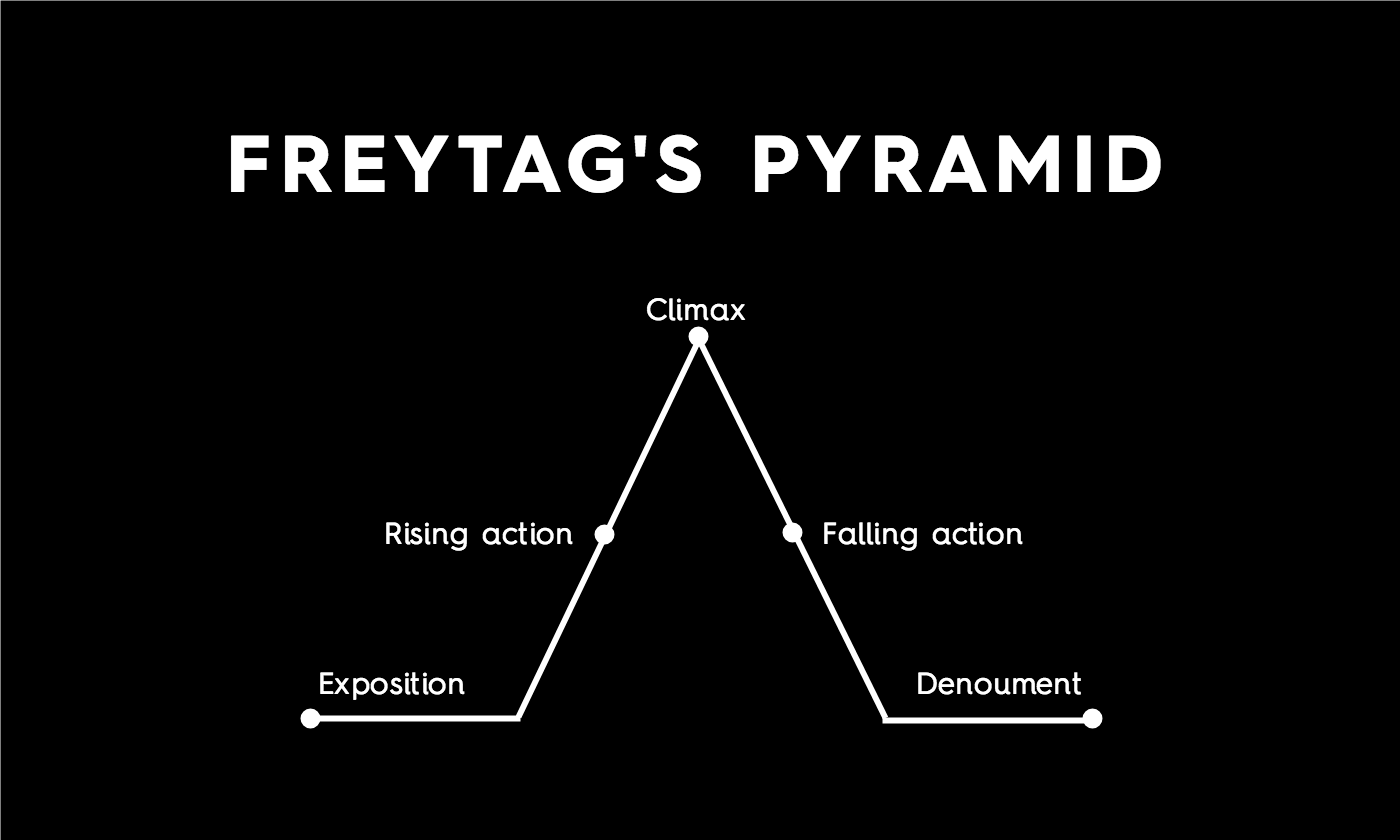
A brand story that works as infrastructure needs five layers, each building on the one before it.
Layer 1: The Belief (Your Point of View)
Every durable brand story starts with a conviction, something you believe about your industry, your buyer’s world, or the way work should be done that not everyone agrees with.
A belief worth building a story around is different from a mission statement. Mission statements are designed for consensus. In contrast, a genuine POV should make at least some people uncomfortable, or at minimum, make competitors unable to claim it.
How to find it: Look at the assumptions your industry treats as obvious. Where do you disagree? What do your best salespeople say in calls that never appears on the website? What would your founder argue about at a dinner party?
Example: At Column Five, our belief is that the best story wins. We don’t mean the biggest budget, the most content, or the most sophisticated tech stack. The company with the clearest, most distinctive narrative captures attention, earns trust, and builds the kind of brand equity that compounds over time.
Layer 2: The Tension (Why This Matters Now)
A belief without context is just an opinion. The tension layer explains why your point of view is urgent: what is happening in the market, in technology, or in buyer behavior that makes this the moment to pay attention.
Tension gives your brand story timeliness without making it disposable. The belief stays constant, while the tension evolves as the market shifts.
Example: The tension behind “the best story wins” is that AI is flooding every channel with competent-but-generic content. The volume of B2B content is exploding while the distinctiveness is collapsing. As a result, companies that haven’t invested in a clear narrative are becoming invisible, to human audiences and to the AI platforms increasingly mediating discovery.
Layer 3: The Stakes (What Happens If You Don’t Act)
People don’t change behavior because something is interesting. They change because the cost of inaction becomes clear.
The stakes layer articulates the real business consequence of ignoring the tension. This is where you connect your narrative to revenue, pipeline, competitive position, or market relevance.
Example: Companies without a clear brand story lose 10–20% of potential revenue through inconsistent messaging. Their content gets produced and published but doesn’t compound; each piece starts from scratch instead of reinforcing a larger narrative. Furthermore, in AI-mediated search, narrative incoherence leads to omission: your brand simply doesn’t get recommended.
Layer 4: The Approach (How You Solve It Differently)
This is where your product, service, or methodology enters, framed through the lens of your belief rather than as a feature list.
The approach layer answers: “Given what we believe and what is at stake, here is how we think the problem should be solved.” It connects your offering to your narrative naturally, without the hard pivot from “thought leadership” to “sales pitch” that readers can feel from a mile away.
Example: Column Five’s approach is to start with narrative clarity before producing a single piece of content. We call the diagnostic process a Story Scan: a structured method for uncovering the expertise, vision, and proprietary data that make a brand’s story ownable. From there, we build a content system that scales the narrative across channels, formats, and touchpoints. The story comes first. The engine follows.
Layer 5: The Proof (Evidence That It Works)
Claims without evidence are just marketing. The proof layer brings specifics: client results, data, case studies, third-party validation.
In B2B, proof is what moves a buyer from “interesting” to “credible.” And in an era of AI-generated content, sourced proof points are one of the few things that reliably separate authoritative content from surface-level summaries.
Example: See how HackerOne closed their story gap and launched a campaign that defined a new category frame (“Cyberstrength”), or how Vercel’s AI thought leadership research translated technical differentiation into a narrative that earned industry-wide citations.
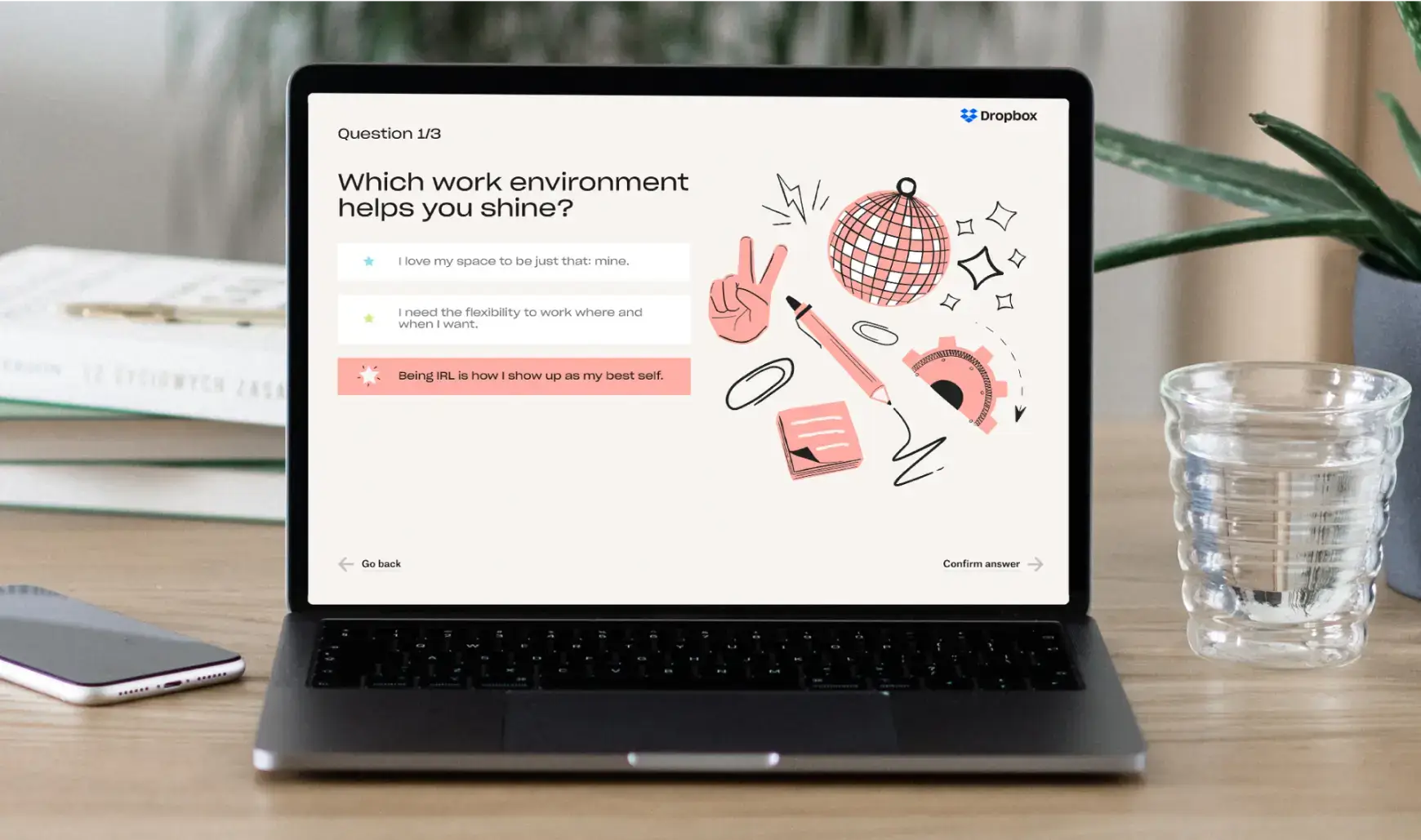
We helped Dropbox increase their brand perception 7% by building a storytelling strategy around their core belief (“We believe the world can work better”). The brand story became the operating system for interactive experiences, video, and social content that attracted talent away from top competitors.
How to Build Your Brand Story: A Practical Framework
The five-layer model tells you what a brand story needs. Here is how to actually build one.
Step 1: Audit What Already Exists
Before creating anything new, map the narrative fragments that already exist across your organization.
- Sales calls: What do your best reps say when they go off-script? What analogies do they use? What objections do they hear most?
- Founder interviews: What does leadership say on podcasts or in all-hands meetings that never makes it to the website?
- Customer feedback: When customers describe why they chose you over a competitor, what language do they use?
- Existing content: Does your blog tell a coherent story, or does each post feel like it was written by a different company?
You are looking for patterns: recurring themes, phrases, and convictions that keep surfacing but haven’t been formalized. The raw material for your brand story almost always exists already. It just hasn’t been shaped.
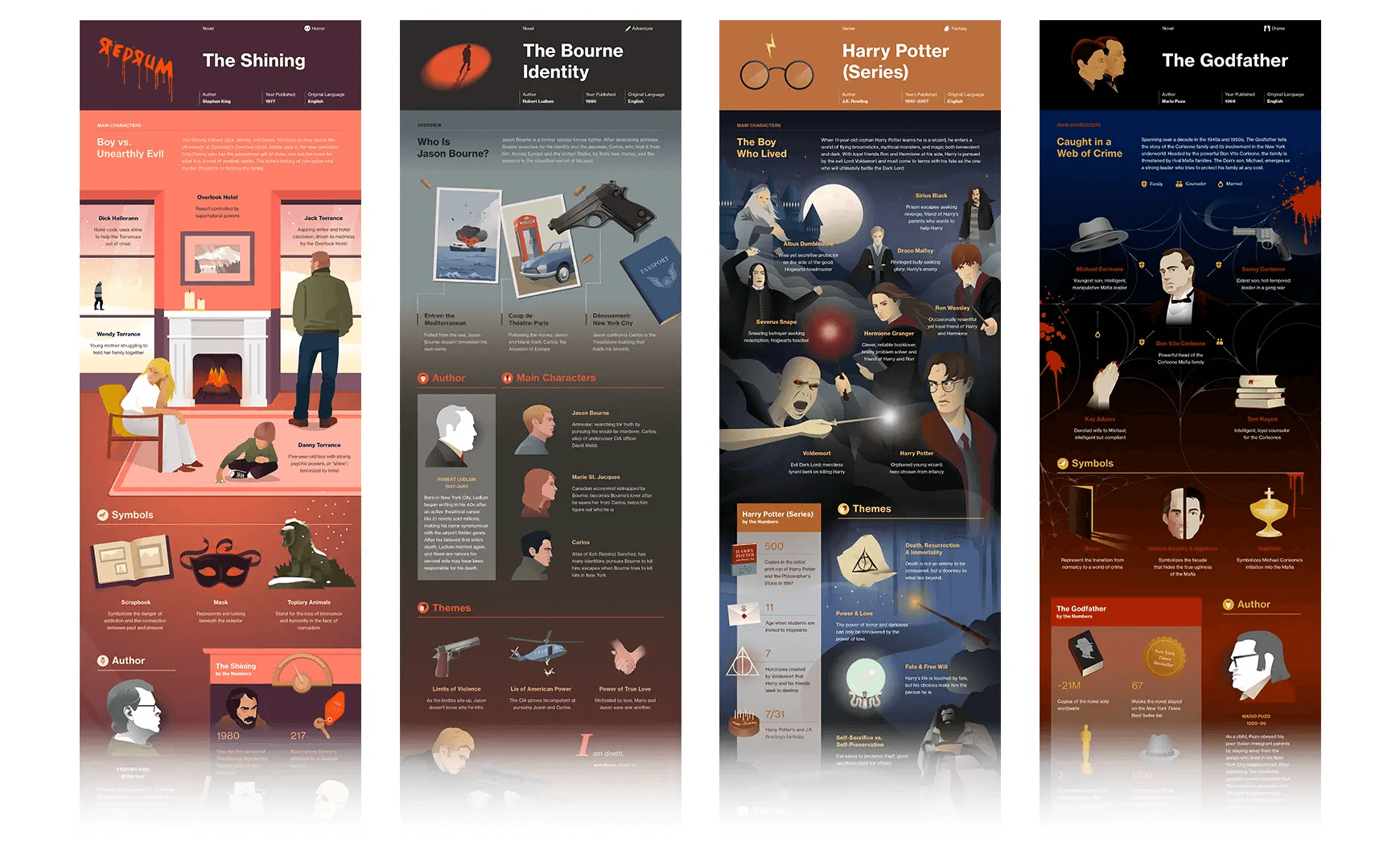
For example, when we worked with Course Hero, the audit revealed a clear pattern: their community of students and educators already had strong stories about how the platform helped them succeed. Those stories became the foundation for an infographic series that positioned the brand as a learning partner, not just a study tool.
Step 2: Name Your Point of View
Take the patterns from your audit and distill them into a clear POV statement. One sentence that captures what you believe about your space that not every competitor would say.
Test it against these criteria:
- Is it specific enough that a competitor couldn’t claim it verbatim?
- Is it opinionated enough that someone could reasonably disagree?
- Is it connected to what your company actually does (not just what it wishes it stood for)?
If the answer to all three is yes, you have a working POV. If it feels safe and universally agreeable, keep digging. Developing your brand heart (purpose, vision, mission, and values) is a useful parallel exercise here.
Step 3: Map the Tension and Stakes
With your POV defined, articulate:
- What market force, industry shift, or buyer behavior change makes this POV urgent right now?
- What happens to companies that ignore this? Be specific: revenue impact, competitive disadvantage, missed market window.
These become the contextual frame that keeps your brand story relevant without making it trend-dependent. The POV stays constant, while the tension and stakes get refreshed as the market evolves.
Step 4: Connect Your Approach
Describe how your product, service, or methodology addresses the tension through the lens of your POV. The key word is through. You are showing how your approach is the natural consequence of your belief, not pivoting from “thought leadership” to “sales pitch.”
Ask: if someone fully accepted our POV, what would they logically look for in a solution? Your approach section should answer that question before it names your product.
Step 5: Codify and Operationalize
A brand story that exists only as a strategy document is a brand story that decays. Therefore, the final step is turning it into a system your team can use daily.
- Create a one-page brand story brief that any writer, designer, or agency can reference before creating content. It should include: POV, tension, stakes, approach, and 3–5 proof points.
- Build brand messaging pillars that translate the story into repeatable themes for different audiences and funnel stages.
- Define brand voice guidelines that express the story’s personality consistently across every channel and content tool, including AI writing assistants.
- Set up an internal linking and content architecture that reflects the story structure, so each new piece of content reinforces the narrative rather than floating in isolation.
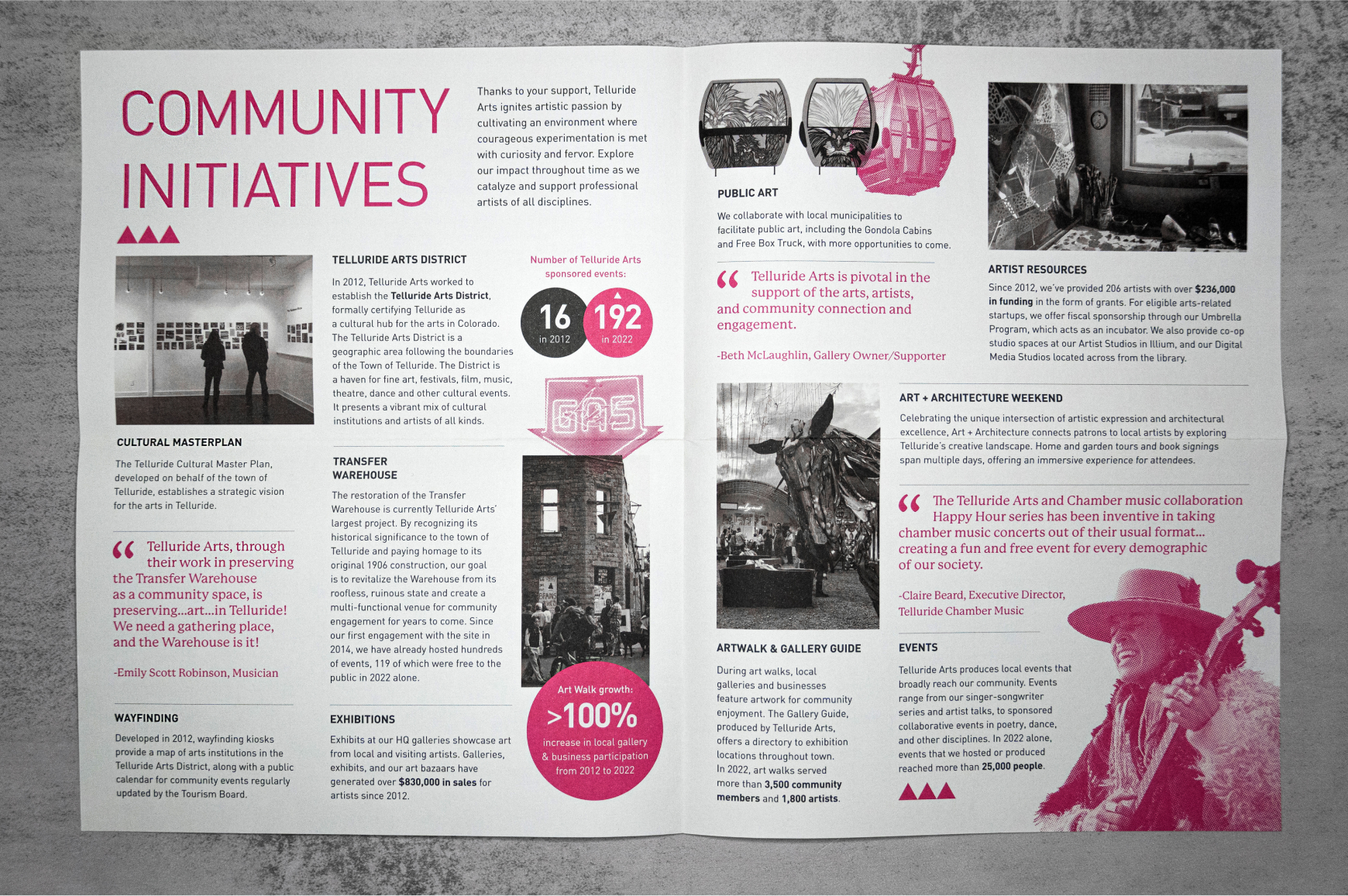
Operationalizing a brand story means the narrative shows up everywhere, even in unexpected formats. For instance, when we designed the annual impact report for Telluride Arts, the brand story translated into clean data visualization that showed donors exactly how their contributions created impact. That is what it looks like when story becomes infrastructure: it adapts to the format without losing the thread.
Brand Story Examples Worth Studying
Theory is useful. Examples are better. Here are three B2B companies whose brand stories are clear enough that you can identify the five layers from their public-facing content alone.
Stripe: “Increase the GDP of the internet”
- Belief: The internet economy is held back by financial infrastructure that is too hard to build on.
- Tension: Developer time is being wasted on payments plumbing instead of product innovation.
- Stakes: Companies that can’t move fast on payments lose to those that can.
- Approach: Provide developer-first financial APIs that make payments as simple as a few lines of code.
- Proof: Processes hundreds of billions of dollars annually. Trusted by Amazon, Google, and millions of internet businesses.
Stripe’s brand story is so embedded in their product, marketing, and culture that it governs everything from their homepage copy to their annual report on the internet economy. That consistency is not an accident. It is infrastructure.
Gong: “Reality over opinion”
- Belief: Revenue teams make better decisions when they base them on what actually happens in customer conversations, not gut instinct or CRM notes.
- Tension: Forecasts are unreliable because they rely on self-reported data from reps.
- Stakes: Inaccurate forecasts lead to missed targets, misallocated resources, and lost deals.
- Approach: Record, transcribe, and analyze every customer interaction to surface what is really happening.
- Proof: Used by over 4,000 companies. Publishes original revenue intelligence research based on millions of analyzed calls.
Notion: “One tool for your whole team”
- Belief: Teams fragment productivity across too many specialized tools, losing alignment and context in the gaps between them.
- Tension: The average knowledge worker switches between 10+ applications daily. Information lives everywhere and nowhere.
- Stakes: Misalignment compounds silently. Teams think they are coordinated until a project fails.
- Approach: An all-in-one workspace that replaces fragmented toolchains with connected documents, databases, and workflows.
- Proof: Used by teams at Nike, Toyota, Figma, and thousands of startups. Consistently ranked among the fastest-growing SaaS products in the category.
In each case, the brand story serves as the organizing principle for everything the company says and builds. For more examples of how leading B2B brands bring their stories to life, see 15 B2B Brand Storytelling Examples That Prove the Best Story Wins.
Your Brand Story Is Your Content Engine
There is a reason the companies with the strongest brand stories also have the most productive content operations. The story does the heavy lifting.
When your brand story is clear, a single belief can generate dozens of content angles:
- The belief itself becomes a thought leadership pillar
- The tension becomes a series of data-driven posts about industry shifts
- The stakes become case studies and ROI-focused content
- The approach becomes how-to guides, product vs. brand frameworks, and methodology explanations
- The proof becomes research reports, original data, and client stories
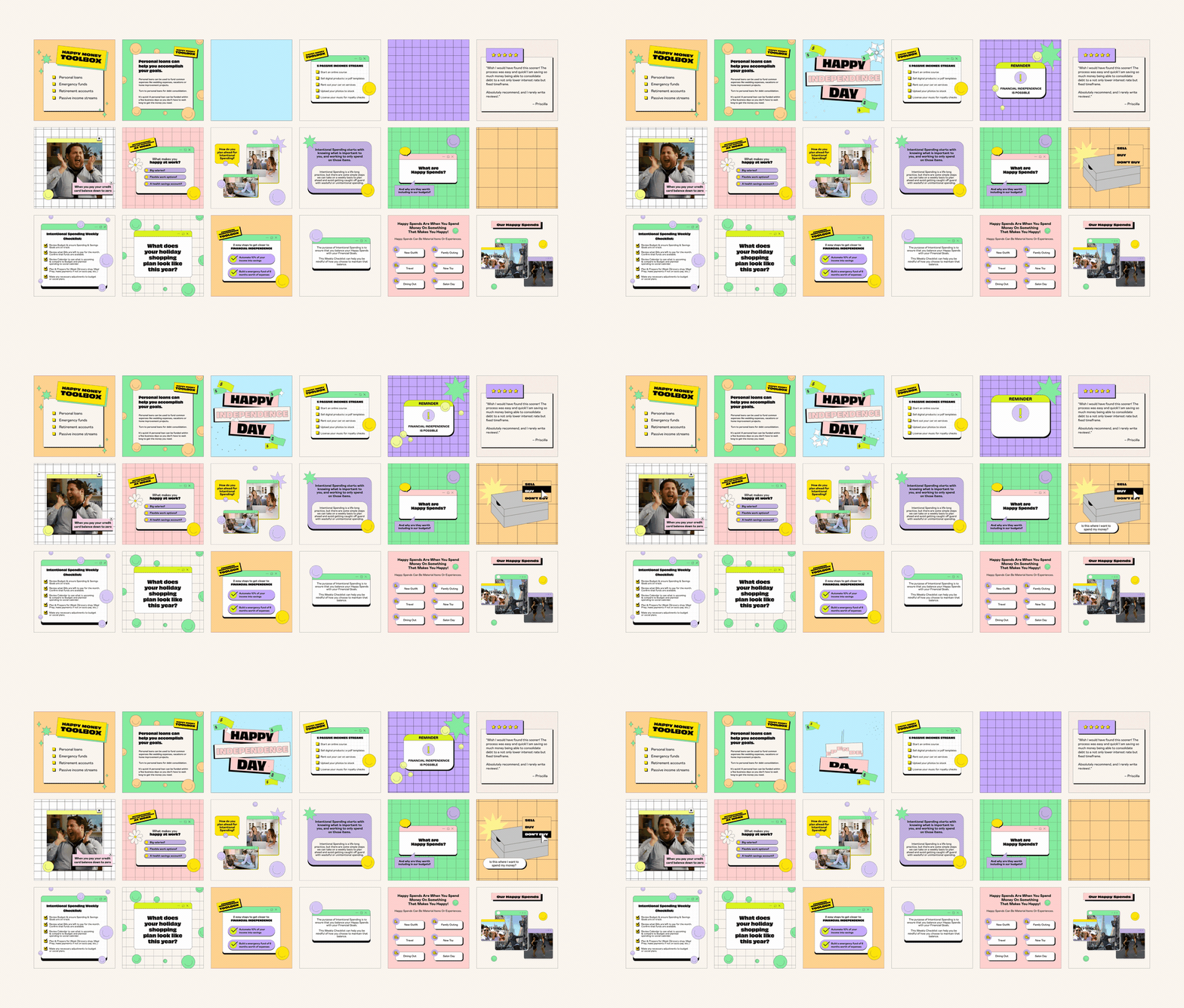
For example, when we helped Happy Money revamp their social strategy, the brand story did this exact work. Three core themes (financial education, wellness, and mental health) became the engine for a stream of colorful motion pieces and social content. Each post reinforced the same narrative from a different angle, and the cumulative effect drove a 77% increase in social engagement.
Similarly, each piece reinforces the others. A reader who discovers your brand through a thought leadership article and later encounters a case study hears the same narrative from a different angle. That consistency builds the kind of recognition and trust that drives 23–33% more revenue compared to brands with inconsistent presentation.
This is what it means to turn your brand story into a scalable content engine. You are building a system where every piece of content serves the same strategic purpose: advancing a narrative that only your company can own.
FAQs
What is the difference between a brand story and a mission statement?
A mission statement describes what your company does and for whom. A brand story, on the other hand, explains why you do it, what you believe about your space, and what is at stake for your audience. Mission statements aim for consensus. Brand stories aim for distinction.
How long should a brand story be?
Your internal brand story brief should fit on one page. In practice, the expression of that story across your content can span thousands of pages. What matters is that a brand story is a framework, not a word count.
How often should you update your brand story?
The core belief and approach should remain stable for years. Meanwhile, the tension and stakes layers should be reviewed every 6–12 months as market conditions shift. If you are changing your brand story every quarter, you haven’t found the right belief yet.
Can AI write your brand story?
AI can help you articulate and refine a brand story, but it cannot discover one. Brand stories come from lived experience, original conviction, and genuine perspective. AI is a powerful tool for scaling the expression of a story that already exists. However, it cannot generate the point of view that makes the story worth telling.
What if our company doesn’t have an obvious brand story?
You do. You just haven’t uncovered it yet. The patterns are in your sales calls, your founder’s convictions, your customer feedback, and the decisions your product team makes every day. In other words, the challenge is extraction and shaping, not invention. A structured diagnostic like the Story Scan can surface these narratives systematically.
Ready to Build a Brand Story That Works?
Your brand story is either working for you or it is not. If your content sounds competent but forgettable, if every post feels like it starts from scratch, if your competitors’ marketing could pass for yours with a logo swap, the story needs work. Talk to Column Five about building a brand story that powers your entire content operation.





Let's upgrade your marketing game
Get fresh tips, how-tos, and expert marketing advice every week. (15,000 people already are.)



Really helpful article. Thanks for sharing!
Great, appreciate it thanks
Good information .
Thank you so much .
Happy to help!
Did you catch James Jernigan’s latest YouTube release?
Thank you so much for the amazing information!
Happy to help!
Amazing! No doubt a brilliant article with to the point description. This information is awesome for newbies. Thanks for keeping people updated.
Regards – Ezio solutions Team – The Best SEO Company in Coimbatore, india
Happy to help!
excellent piece; well written and very informative.
Thanks much!
Great blog, agree with every points, I was also struggling with the same issue of storytelling, at the time of branding. Zonion helped me in drafting my business storyline. Now it’s been 2years, my business is doing well.
That’s great to hear!
Wonderful blog, Thanks Katy for writting this awsome blog. It explain all aspects of brand story, currently I am taking services from Zonion Creative Agency, glad to know that they are applying above mentioned points for brand story telling of my business.
Thanks, Steve! Glad to hear that.
Very insightful! Many thanks for sharing your talent on such an important topic!!! Cheers!
Happy to help!
This is an incredible piece on how to tell the brand story. Its beautifully explained and can ‘go to work’ with it I work in the hospitality and I am putting together some great blogs in a book . Can I use your content and give you the credits ?
Hi Vikram. Can you email kfrench@columnfivemedia.com with more details on the book?
This is truly helpful!!! Thank you for this smart and well written guide. So kind of you to share!
Thanks, Catherine. We hope it helps!
Just started receiving your emails. Finally, something I look forward to reading for informative, *really* useful content!
well done article, clear, easy to digest, most of the time talking about branding sounds very abstract but here is clear, easy to understand and following a map of a good branding will do. Thank you for sharing, love your content.
Thanks, Cruz! Like we said, we tried to make what we wish we would have had when setting out on this work.
The most intelligent, well- researched, informative articles Awesome!
Thanks, Felicity!