

Marketing campaigns are the cornerstone of a good marketing strategy. By telling the right stories to the right people, you can easily and effectively grab attention, increase brand awareness, and cultivate strong relationships for long-term brand success. In short, you can get fantastic results—and build truly successful marketing campaigns—if you know what you’re doing.
Unfortunately, not all successful marketing campaigns come together easily. Whether it’s because of a lack of knowledge or bandwidth, there are plenty of pitfalls that can prevent a campaign from performing as well as it should. We know this because we’ve made just about every mistake in the book. Luckily, we’ve also figured out how to get from brainstorm to launch with less stress. With that knowledge, we’ve helped brands craft successful marketing campaigns that drive measurable brand awareness across industries. And we can help you do the same. That’s why we’re going to show you how to craft and launch marketing campaigns that support your larger marketing strategy and business goals.
Table of Contents
- What Are Marketing Campaigns?
- Why Should You Create Marketing Campaigns?
- What Do Marketing Campaigns Look Like?
- The Keys to Good Marketing Campaigns
- How to Craft Marketing Campaigns
- Remember: Experimentation Is the Key to Success

What Are Marketing Campaigns?
You might hear the word “campaign” and flashback to those Mad Men ad campaigns. They’re somewhat similar, but in an era where engagement marketing is surpassing interruption marketing, marketing campaigns are a more effective way to get your brand’s message across.
Basically, marketing campaigns are a way to communicate a specific message to targeted groups via content. Campaigns can be large or small, built around a product launch or a brand initiative. Above all, they are a structured way to execute your marketing strategy and drive measurable brand awareness through coordinated content, ads, and social media efforts.
Why Should You Create Marketing Campaigns?
Good content marketing isn’t about creating more content; it’s about creating content that supports a clear marketing strategy. Well-planned campaigns help you build brand awareness, test messaging, and create repeatable frameworks for successful marketing campaigns.
Your content is more impactful. Cohesive messaging helps establish credibility and strengthens your presence across channels like social media and paid ads. Campaigns ensure your message reaches the right audience in the right format.
Content is scalable. Whether you’re running organic programs on social media or launching paid ads, campaigns can expand or contract based on budget and goals.
Campaigns drive better ROI. Instead of isolated efforts, coordinated successful marketing campaigns generate insights you can use to refine your broader marketing strategy and improve future performance.
You can allocate resources more effectively. When campaigns are planned in advance, you know exactly what content, ads, and social media assets you need.
You get more mileage from your content. A single campaign asset can become blog posts, visuals for social media, and creative for paid ads, extending reach and increasing brand awareness.
What Do Marketing Campaigns Look Like?
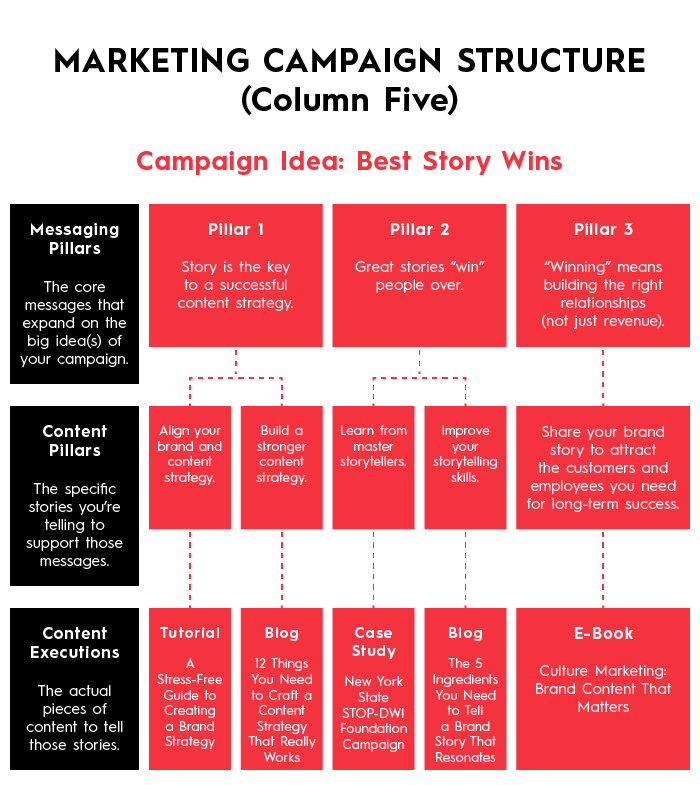
Most successful marketing campaigns include:
- Your campaign idea: the Big Idea you’re reinforcing
- Messaging pillars: the main messages to deliver
- Content pillars: the specific stories that deliver those messages
- Content executions: across formats such as articles, videos, social media content, and supporting ads
Together, the framework looks like this:
The Keys to Good Marketing Campaigns
A good campaign supports your marketing strategy and delivers measurable business impact. The strongest successful marketing campaigns share four traits:
- Clarity: Strong campaigns have a clear message that supports a specific goal.
- Memorability: You want something that is meaningful and memorable, as this is the key to moving people along the buyer’s journey.
- Scalability: You want a message that can translate across mediums, from organic social media to paid ads.
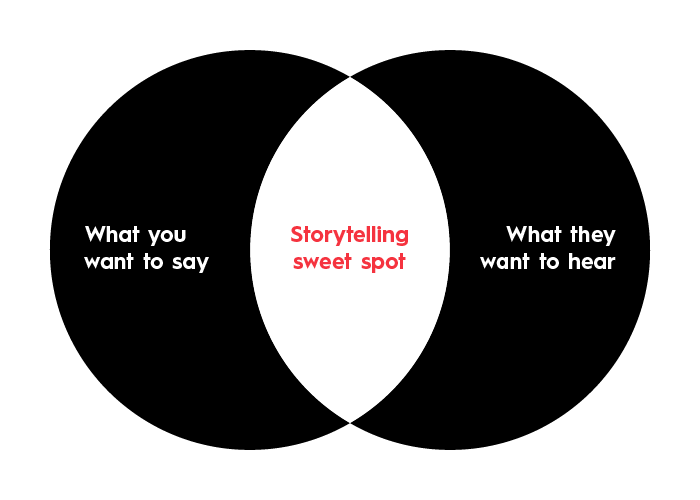
- Value: A good campaign provides value to people in some sort of way, whether it entertains, educates, or inspires. An effective campaign doesn’t simply toe the line of your brand promise or value proposition. Rather, the best campaigns sit in the sweet spot of what people want to hear and your brand wants to say.
Not every campaign needs to be massive. Even small, targeted efforts on social media or localized ads can become successful marketing campaigns when aligned to the right objective.
How to Craft Marketing Campaigns
Here’s how to build successful marketing campaigns step by step.
Before you start, download our Marketing Campaign Template, which you can use as you work through these steps.
Step 1: Start small.
Some brands get excited and want to take on a big, ambitious campaign. It’s tempting, but you risk running a campaign that’s disjointed, especially if you have a bunch of projects happening simultaneously.
If you’ve never done a campaign before, or if you’re looking to do something new (or dramatically different than what you’ve been doing), we suggest starting small with a simple, strategic campaign (e.g., a Facebook or Instagram campaign). That way you can see what works, what doesn’t, and how you can improve—without blowing your whole budget. (Even a simple A/B test on a Facebook ad can provide major insight about your messaging.)
Step 2: Assess your content strategy.
It’s tempting to dive right into content, but you need to do some legwork first. Good campaigns start with a solid content strategy, wherein you’ve identified and articulated the information you need to succeed. (If you haven’t done this work, follow our Guide to Complete a Content Strategy.
Before you start, make sure you and your stakeholders have a clear and unified understanding of your:
- Goal: You need to know exactly what you’re trying to achieve (e.g., newsletter subscribers), as every decision you make will be influenced by this larger goal.
- Budget: How much have you allocated? Again, starting small is an economical way to make sure your campaign provides a solid ROI.
- Personas: Who are you trying to reach? What are they interested in? What do they care about? If you don’t know whose attention you’re trying to get, it will be hard to craft a campaign that will actually work. We always recommend crafting marketing personas, which help you segment your targets and identify what they care about.
- Metrics: There’s no point in sinking time, money, and resources into marketing campaigns if you don’t know how to determine whether or not they’re successful. Make sure you identify your measurement approach before you start crafting campaigns. If you’re not sure which metrics to track, here are some of the most common metrics to include in your content strategy.
- Channels: You want your campaigns to get in front of the right eyes, so it’s crucial to know the most effective channels to reach your personas. This will also influence the type of content you create (e.g., video for Instagram or articles for your blog).
Knowing this information will keep everyone on the same page and provide clarity through any confusion down the road.
Step 3: Find the right idea.
Many marketing campaigns fail from the beginning, simply because the idea wasn’t quite right. To make sure your idea will hold up:
- Focus on what people need. Again, it’s all about finding something that is interesting and relevant to people. (Here’s how to make sure your campaigns provide true value.) As you ideate, ask yourself, “How does this serve my personas?”
- Vet your ideas through your personas. If you can’t clearly identify how and why someone will be interested in it, you need to go back to the drawing board.
For more ways to brainstorm campaign ideas, try these prompts to tell your brand story, and check out these awesome examples of brand storytelling.
Example: The dating app Hinge knows exactly what their people are looking for: love. Thus, if Hinge does its job and delivers on its ultimate promise, people don’t need to use the app anymore. To convey this messaging, they launched their latest campaign around the idea that they’re “The dating app designed to be deleted.” This was a clever angle to capture interest and show that they’re invested in helping people find good relationships.
Step 4: Identify the right format.
When it comes to marketing campaigns, the medium is just as important as the message. Remember: Just because you want to create a certain type of content doesn’t mean it’s the best fit for your story.
- Consider your personas. What type of content are they used to consuming? What do they prefer?
- Consider your channels. Some channels may not support the type of content you want to publish, while others may be particularly effective. For example, a stunning photo series is more compelling on Instagram than on Twitter, whereas a 10-part documentary series is ideal for YouTube.
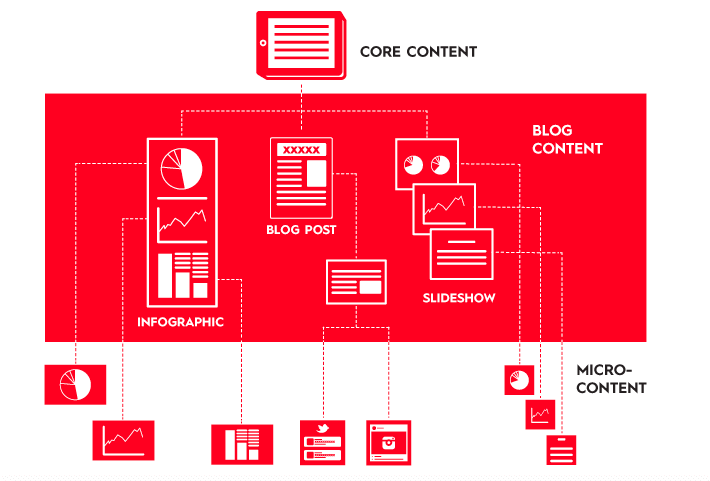
- Make the most of your content. Depending on the format you choose, you can easily turn one asset into multiple assets for promotion on different channels. For example, one e-book can be turned into an infographic, article, and microcontent for social. This is a smart way to recycle, reuse, or repurpose your content to make a lasting impact. (Again, this is why it’s important to think strategically and be intentional about your content plan—before you start creating it.)
Learn more about how a divisible content strategy can help you get the most mileage from your content, and if you’re not sure what content format might work best for your story, here’s how to figure it out.
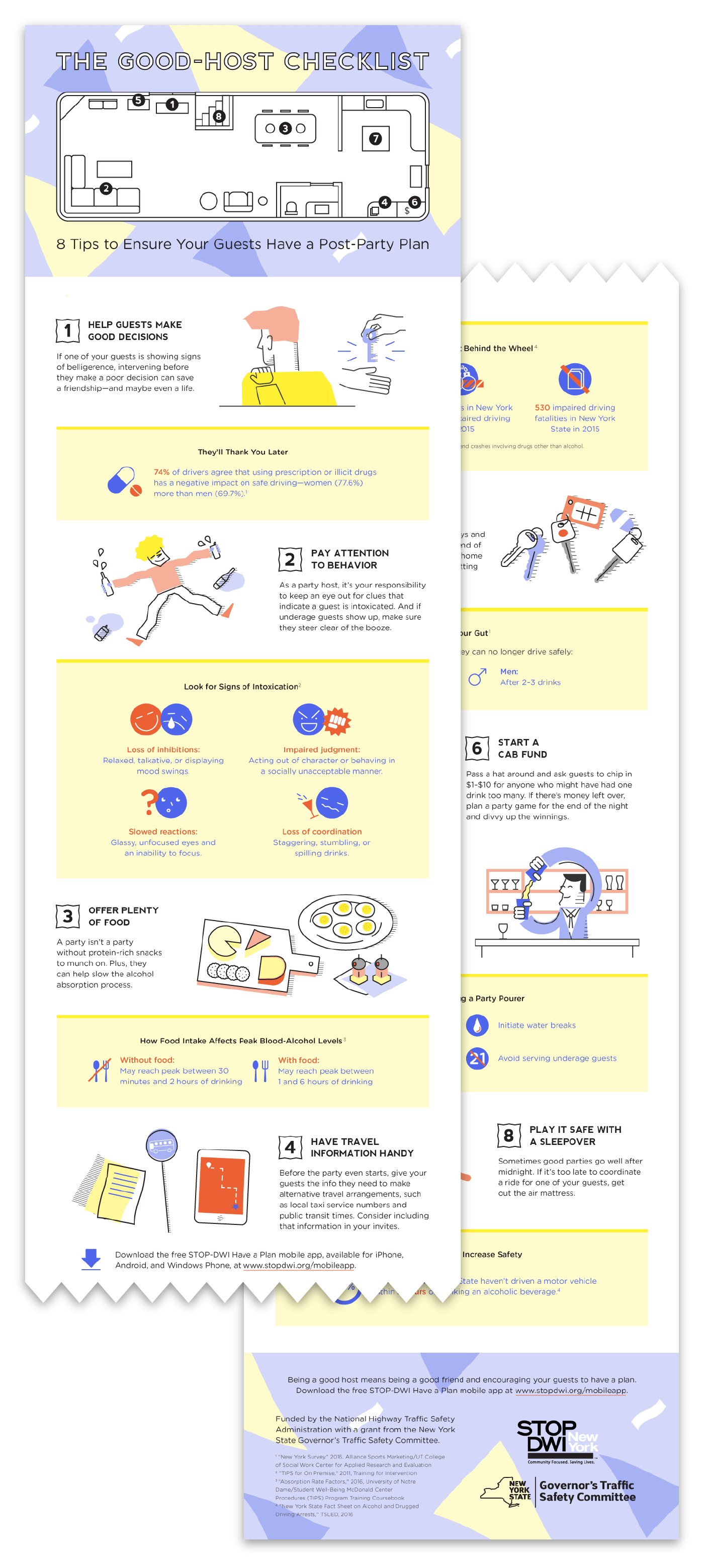
Example: We collaborated with the New York State STOP-DWI Foundation’s “Have a Plan” a campaign to stop people from driving under the influence. Our content aimed to inform and empower young people to make the right decisions while emphasizing the seriousness of the issue. Through video and infographics, we made educational content to help people make the right plan before a night of partying.
Step 5: Set up your infrastructure.
So you have a great campaign idea, and you know your format, but how are you going to get content from rough draft to final file? You may think it’s easy, but content creation challenges are one of the biggest problems marketers face today. This is usually due to a lack of skill, knowledge, or bandwidth, as well as a true understanding of what it takes to produce different types of content. To make sure the process goes smoothly…
- Write a strong creative brief. Follow our Content Brief Template to make sure everyone on your team has the info they need to do the creative work.
- Create a reasonable timeline. You don’t want to cut corners or get held up indefinitely. Craft a timeline that includes built-in approval stages, and make sure all stakeholders have signed off on work before it moves down the production pipeline.
- Assign the right roles. Make sure everyone knows who’s owning what, and who they can turn to with questions.
- Bring in support if you need it. You can always use a freelancer or agency to supplement your content creation if you’re struggling in one area or don’t have the knowledge to produce something more time-intensive. Here’s how to decide if you should use a freelancer, agency, or do it in-house. If you choose the latter, here are the questions to ask to find the right agency.
Remember: Things like video and animation take more time to create than infographics and static content. You don’t want to spend even more time and money fixing them if things go wrong.
Step 6: Create and iterate.
The actual content creation is one of the most enjoyable (but most challenging) parts of a marketing campaign. To create the best, most effective content possible…
- Apply your brand identity. Make sure it’s written in your brand voice and that the design reflects your visual identity. (If you don’t have a proper brand identity, here’s how to find your brand voice and create a visual identity.)
- Write for the people you’re trying to reach. Avoid buzzwords, use terms they understand, and speak to their knowledge level. (For more writing tips, check out these resources to write great copy.)
- Use tools to work smarter. Whether you’re creating e-books, infographics, or interactives, here are 100+ content creation tools to make crafting campaigns easier.
- Follow best practices for design. Little tricks can make a huge difference in how people view your content. Follow these tips to design better visual content.
- Craft a strong CTA. Don’t be too cheesy or too salesy, but make sure people know what to do after consuming your content.
- Proof for typos. Sloppy mistakes can erode your credibility; don’t send it out the door without a final look.
- Optimize for SEO. Use the right keywords to increase your traffic. Follow our guide to find the right keywords, and make sure to optimize all content for those keywords, including your title, headers, URL, etc.
For more tips and tools to create great content, check out our ultimate guide to content creation.
Step 7: Craft your distribution strategy.
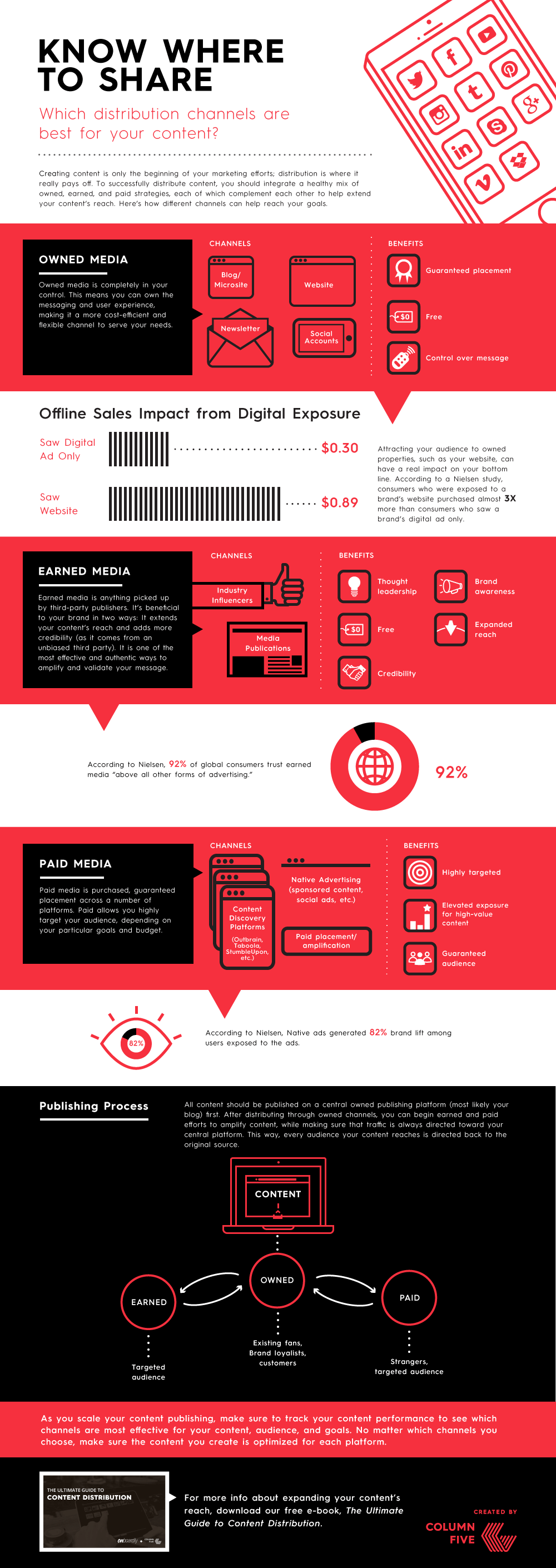
You can’t just hit publish and expect people to find your content. You need to intentionally and strategically distribute it. Thus, one of the most crucial parts of any marketing campaign is the distribution strategy. To make your promotion more effective…
- Determine your hashtag beforehand. Make it something simple and easy to remember.
- Prep your assets. Gather all the assets you’ll need to promote content, including social content, high-res images, copy, ads, etc.
- Set up your tracking tools. You’ll want to know exactly how your campaign impacted the business, compared with past efforts and other concurrent. marketing activities. For this you’ll need attribution/tracking links, so set them up and test beforehand.
- Run paid promo. Paid social, native ads, influencers, and paid search can be effective ways to funnel people to your campaign content.
- Reach out to publications and influencers. Try these tips to promote content like an agency would.
For more tips to distribute your content effectively, find out how to craft a distribution strategy in 6 steps.
Remember: Experimentation Is the Key to Success
Not every campaign will deliver immediate results. But the more you test messaging, channels, social media formats, and ads, the stronger your marketing strategy becomes.
Regularly review performance, refine your approach, and look for opportunities to increase brand awareness with each new campaign. Over time, these learnings compound—turning experimentation into a repeatable system for building successful marketing campaigns.
That said, sometimes you might hit a wall or feel a little lost. If so, we’re happy to help you crack the marketing campaign code. Find out what it’s like to work with us on a content strategy, or hit us up.




Let's upgrade your marketing game
Get fresh tips, how-tos, and expert marketing advice every week. (15,000 people already are.)



Thank you a lot for giving everyone remarkably marvellous possiblity to discover important secrets from this site. It’s usually very ideal and as well , stuffed with a good time for me and my office friends to visit your web site not less than three times weekly to learn the fresh guidance you have got. And lastly, I’m always amazed with your mind-blowing secrets you serve. Selected 2 facts in this article are undoubtedly the simplest we’ve ever had.
Love you!